Search News
Industry Portal
Popular Tags
Pneumatic Actuator Supplier Checklist for Control Accuracy and Maintenance
Author
Time
Click Count
Choosing the right pneumatic actuator supplier directly affects control accuracy, lifecycle cost, and maintenance risk in automated systems. For technical evaluators, a disciplined checklist helps verify torque consistency, response precision, material compatibility, seal reliability, and service support before procurement. This guide outlines the critical benchmarks and inspection points needed to compare suppliers with greater confidence and reduce downstream performance uncertainty.
In process control, valve automation, utility skids, and safety instrumented functions, the supplier decision is rarely just about unit price. A pneumatic actuator supplier influences torque margins, cycle repeatability, spare-parts continuity, and the speed of corrective action when uptime is under pressure. For technical assessment teams working across high-spec industrial environments, a structured review process reduces hidden risks before they reach commissioning or maintenance stages.
This article focuses on the checkpoints that matter most when comparing suppliers for quarter-turn and linear pneumatic actuators used in demanding B2B applications. It is written for evaluators who need evidence-based selection criteria, practical maintenance considerations, and a clear path from specification review to supplier approval.
Why Supplier Selection Has a Direct Impact on Control Accuracy
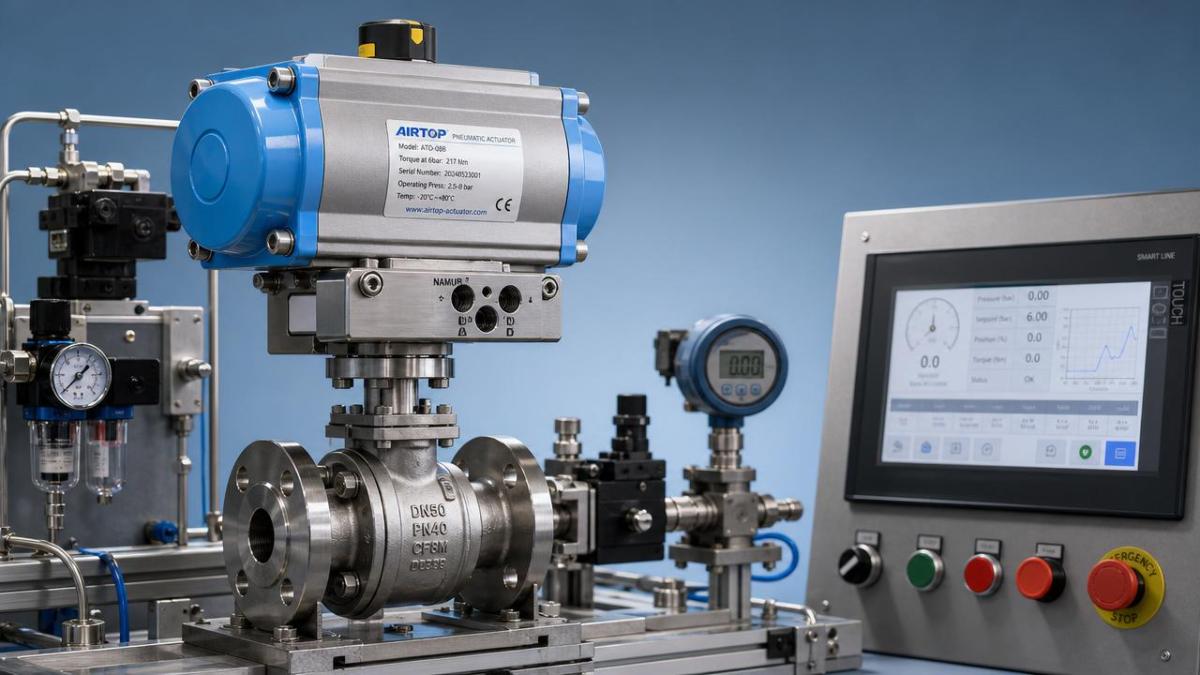
Control accuracy is not determined by the actuator alone. It depends on how the pneumatic actuator supplier defines torque output, spring return behavior, air pressure assumptions, and mounting tolerances. A supplier with weak documentation may quote nominal torque at 6 bar, while your plant runs at 4.5-5.0 bar during peak demand. That gap can shift valve positioning performance and increase stiction-related hunting.
For on-off valves, a 20%-30% torque safety margin may be acceptable in many standard services. For modulating applications, however, evaluators often need tighter review of hysteresis, deadband, and response time. Even a small deviation in actuator sizing or air quality assumptions can affect travel repeatability over 100,000 cycles or more.
Key Variables That Change Real-World Positioning Performance
A qualified pneumatic actuator supplier should provide tested data for output torque curves, breakaway torque, end-of-stroke torque, and cycle timing. These values should be linked to actual supply pressure bands such as 3-8 bar, not isolated laboratory points. In precision-oriented installations, response time should also be reviewed with the selected solenoid valve, tubing length, and control accessories.
- Operating pressure range and minimum actuation threshold
- Output torque at start, mid-stroke, and end position
- Cycle time under realistic load and piping conditions
- Repeatability during high-frequency operation, such as 10-20 cycles per hour
- Compatibility with positioners, limit switches, and NAMUR accessories
What Technical Evaluators Should Request First
At the prequalification stage, ask for dimensional drawings, torque tables, seal material options, mounting interface details, and a maintenance manual. If the supplier cannot deliver these within 3-5 business days, that often signals weak engineering support. Fast document control is especially important in multi-site procurement, where actuator packages may need review by mechanical, instrumentation, and maintenance teams in parallel.
The table below helps technical teams connect supplier claims to field-relevant control benchmarks. It can be used during supplier comparison meetings or RFQ review workshops.
The main takeaway is that actuator accuracy starts with transparent engineering data. A reliable pneumatic actuator supplier should not force buyers to estimate missing values. When data quality is low, downstream teams compensate through excessive torque oversizing, additional accessories, or longer commissioning time.
The Core Technical Checklist for Comparing a Pneumatic Actuator Supplier
A disciplined checklist allows technical evaluators to compare suppliers consistently across projects. Instead of relying on broad claims such as “heavy-duty” or “maintenance-friendly,” convert the review into measurable checkpoints. In most industrial sourcing programs, 6-8 technical categories are enough to expose major differences in design maturity and service readiness.
1. Torque Sizing Method and Safety Margin
Check whether the pneumatic actuator supplier sizes actuators based on actual valve torque data, service factor, media condition, and breakaway peaks. A basic torque figure is not sufficient. Evaluators should confirm whether the supplier accounts for dry-seat torque, infrequent operation, corrosion buildup, or temperature-related friction changes over a 12- to 36-month maintenance interval.
2. Material Compatibility and Corrosion Resistance
Housing alloys, shaft coatings, fastener grade, and seal materials should match the process environment. For outdoor or washdown use, technical teams often review anodized aluminum, stainless steel hardware, and corrosion categories suited to marine or chemical exposure. Internal seals such as NBR, FKM, or low-temperature compounds should be selected according to ambient range, media traces, and lubrication strategy.
3. Seal Reliability and Leak Control
Seal life has a direct impact on maintenance frequency. Ask how many cycles the seal package is designed to support under standard conditions and what changes under dry, humid, or contaminated air. A capable pneumatic actuator supplier should also define filtration requirements, such as 40 micron general filtration or finer air preparation depending on accessories and duty cycle.
4. Integration with Valves and Control Accessories
Confirm compatibility with valve stem adapters, bracket kits, limit switch boxes, positioners, solenoid valves, and manual overrides. Standardized interfaces reduce engineering hours and lower retrofit risk. If a supplier depends heavily on custom brackets for routine combinations, lead time can extend by 2-4 weeks and field fit issues become more likely.
5. Documentation, Testing, and Traceability
The documentation package should include assembly drawings, torque charts, spare-parts lists, pressure test procedures, and installation instructions. For regulated or high-consequence environments, evaluators may also request serial traceability, material declarations, and pressure boundary verification tied to purchase order and batch records.
6. Service Support and Spare-Parts Continuity
A pneumatic actuator supplier should define spare kit availability, standard lead times, and support response targets. Practical benchmarks include quotation turnaround within 48-72 hours, standard spare dispatch in 3-7 days, and engineering clarification within 1 business day for active projects. These indicators often matter more than small differences in initial unit cost.
The checklist below can be integrated into an internal technical bid evaluation sheet. It helps convert broad supplier comparisons into consistent pass, caution, or reject decisions.
When technical teams score these categories in a weighted format, supplier differences become visible very quickly. Many projects benefit from assigning 30% weight to sizing and performance data, 25% to materials and reliability, 20% to integration, 15% to documentation, and 10% to service support.
Maintenance Planning: What a Good Supplier Should Help You Prevent
Maintenance risk is often underestimated during actuator sourcing. A lower-priced unit can become more expensive within 18-24 months if spare kits are hard to obtain, seals wear early, or the actuator requires frequent removal for inspection. The best pneumatic actuator supplier supports maintainability at the design, documentation, and parts-planning level.
Failure Modes That Increase Lifecycle Cost
Common issues include internal air leakage, spring fatigue, shaft seal wear, corrosion at external fasteners, and bracket misalignment. In facilities with inconsistent air treatment, contaminants can accelerate seal wear and reduce cycle life. Evaluators should ask how the supplier recommends preventive inspection intervals, such as every 6 months for heavy-duty cycling or every 12 months for moderate service.
Maintenance Questions Worth Asking Before Approval
- Can seal kits, springs, and bearings be replaced on site with standard tools?
- Is there a recommended overhaul interval based on cycle count, for example 250,000 or 500,000 cycles?
- Does the pneumatic actuator supplier provide exploded views and spare part coding?
- Are maintenance instructions generic, or matched to the exact actuator configuration ordered?
- Can local service partners support urgent troubleshooting within 24-72 hours?
These questions reveal whether the supplier is prepared for the full asset lifecycle, not just the shipment stage. In critical plants, maintainability can be the difference between a 2-hour repair and a 2-day shutdown extension.
How to Evaluate Spare Strategy and Support Depth
A practical spare strategy usually has 3 layers: commissioning spares, operational consumables, and shutdown overhaul kits. The pneumatic actuator supplier should be able to recommend minimum stocking levels based on actuator population, criticality, and service severity. For example, a site with 50-100 similar actuators may stock 5%-10% seal kits and a smaller number of spring modules depending on failure history and lead time exposure.
Support depth also includes training. Short maintenance training sessions of 2-4 hours can reduce assembly errors, especially around spring cartridge handling, travel stop adjustment, and accessory alignment. Technical evaluators should treat training capability as part of the supplier’s maintenance offering, not an optional extra.
A Practical Supplier Assessment Workflow for Technical Teams
The most effective procurement reviews use a staged workflow rather than a single-point quotation comparison. This is especially useful when multiple suppliers appear comparable on paper. A structured 5-step method reduces ambiguity and creates a documented basis for internal approval.
Step 1: Define the Duty Profile
Record valve type, torque demand, fail position, ambient temperature, cycle frequency, air supply range, accessory requirements, and corrosion exposure. Even 4-6 missing data points can distort actuator sizing and price comparison.
Step 2: Prequalify the Pneumatic Actuator Supplier
Review technical documentation quality, standardization level, engineering response time, and manufacturing consistency. Eliminate suppliers that cannot explain torque methodology or provide clear maintenance documentation.
Step 3: Compare the Total Delivered Package
Assess not only the actuator body, but also brackets, accessories, testing, preservation, packaging, and spare recommendations. A lower unit price can hide missing items that later add 10%-15% to installed cost.
Step 4: Validate Through Clarification
Hold a technical clarification round to review assumptions. Ask the supplier to confirm pressure basis, service factor, material options, and recommended maintenance intervals in writing. This reduces disputes during FAT, site installation, and commissioning.
Step 5: Approve with a Controlled Vendor Record
Store approved drawings, spare lists, and contact routes in a vendor file linked to the actuator family. This is particularly valuable for infrastructure owners and multi-project organizations that want to reuse approved supplier data across several procurement cycles.
For technical evaluators working in reliability-driven industries, the strongest pneumatic actuator supplier is usually the one that combines traceable performance data, serviceable design, and responsive support. If you need a structured review framework for sourcing, benchmarking, or technical due diligence, G-CST can help align supplier evaluation with real engineering risk, maintenance planning, and procurement discipline.
Use the checklist points in this guide to screen suppliers before RFQ closure, reduce uncertainty in actuator selection, and protect long-term asset performance. To discuss application-specific benchmarks, compare supplier documentation, or obtain a customized evaluation approach, contact us today, request a tailored solution, or explore more technical sourcing insights.
Recommended News
 Jun 14, 2026LED Commercial Lighting: How to Compare ROI, Lifespan, and MaintenanceLED commercial lighting comparison starts with ROI, lifespan, and maintenance. Learn how to assess lifecycle cost, failure risk, and supplier claims for smarter facility decisions.
 Jun 12, 2026Best Pet Grooming Clippers for Coat Type and Daily Usepetgroomingclippers guide: discover how to choose the best clipper by coat type, power, blade control, and daily grooming needs for smoother, safer, more reliable results.
 Jun 07, 2026Audio Equipment Setup Mistakes That Hurt Sound QualityAudio equipment not delivering the sound you expected? Discover the most common setup mistakes in placement, signal flow, power, and room acoustics—and how to fix them fast.
 May 27, 2026Robotic Programming Software Wholesale: Key Integration ChecksRobotic programming software wholesale: compare PLC, SCADA, digital twin, and compliance integration checks to reduce risk, improve uptime, and choose scalable software with confidence.
 May 23, 2026Impact of EV on Motor Precision in 2026 ApplicationsImpact of EV on motor precision in 2026: discover a practical checklist for evaluating thermal drift, torque ripple, encoder accuracy, and control stability across key industries.
 May 23, 2026Miniaturization of Motion Systems: Key Design Trade-OffsMiniaturization of motion systems explained: explore the key design trade-offs in stiffness, thermal stability, load capacity, and control accuracy to evaluate compact platforms with confidence.
 May 23, 2026Industrial Automation Motion News: 2026 Trends to WatchIndustrial automation motion news for 2026 reveals key trends in precision, resilience, and smart integration. Discover scenario-based insights to guide compliant, scalable investment decisions.
 May 22, 2026Motion Control System Latency and Its Impact on Cycle TimeMotion control system latency directly affects cycle time, accuracy, and throughput. Learn where delays hide, how to diagnose them, and practical ways to boost performance.
 May 21, 2026Servo Drive Frequency Response: What Limits ControlServo drive frequency response explained: learn what limits control bandwidth, from motor physics and encoders to stiffness and backlash, and how to choose the right tradeoff for real-world performance.
 May 21, 2026Linear Motor Peak Force Data for Safe SizingLinear motor peak force data explained for safe sizing: learn how to verify duration, duty cycle, cooling, and drive limits to reduce risk and choose the right motion system.
 May 21, 2026How to Verify Linear Actuator Positioning AccuracyLinear actuator positioning accuracy explained with practical test steps, tools, and troubleshooting tips to reduce drift, improve repeatability, and keep motion systems reliable.
 May 20, 2026Choosing a Cam Follower OEM Manufacturer for Lower FailuresCam follower OEM manufacturer selection impacts uptime, failure rates, and lifecycle cost. Learn how to identify a reliable partner with proven quality, traceability, and engineering support.
 May 20, 2026How to Evaluate a Precision Rack and Pinion Supplier in 2026Precision rack and pinion supplier evaluation in 2026: learn how to compare accuracy, traceability, quality systems, and supply resilience to choose a reliable partner.
 May 19, 2026Linear Motor Supplier Red Flags in High-Speed AutomationLinear motor supplier warning signs can make or break high-speed automation. Discover the key red flags in validation, compliance, supply stability, and support before you buy.
 May 19, 2026How to Vet a Stepper Motor Factory for Stable OutputStepper motor factory selection starts with stable output. Learn how to audit capacity, quality control, traceability, and delivery performance to reduce sourcing risk.
 May 19, 2026Direct Drive Motor OEM: Precision vs Heat Trade-OffsDirect drive motor OEM evaluation starts with precision vs heat. Learn what to verify in torque, cooling, encoder drift, and long-duty accuracy before choosing a reliable supplier.
 May 18, 2026Linear Actuator Supplier Guide for Load, Speed, and Duty Cycle FitLinear actuator supplier guide: learn how to match load, speed, and duty cycle for reliable performance, lower risk, and smarter supplier selection.
 May 18, 2026Precision Ball Screw Factory Audit Checklist Before Volume OrdersPrecision ball screw factory audit checklist for volume buyers: verify process control, traceability, quality systems, capacity, and delivery reliability before costly sourcing mistakes.
 May 18, 2026Servo Motor OEM Manufacturer Selection for Stable High-Speed AutomationServo motor OEM manufacturer selection is critical for stable high-speed automation. Learn how to compare reliability, integration support, and lifecycle value before you buy.
 May 16, 2026How to Read Solenoid Valve Cycle Life Data CorrectlySolenoid valve cycle life data explained clearly: learn how to compare test claims, spot hidden limits, and choose valves more confidently for reliable performance.
 May 15, 2026Valve Actuator Response Time: What Delays Really MeanValve actuator response time explained: discover what delays really mean for process stability, safety, and control accuracy—and how to evaluate suppliers with confidence.
 May 14, 2026Pneumatic Actuator Supplier Checklist for Control Accuracy and MaintenancePneumatic actuator supplier checklist for better control accuracy and lower maintenance risk. Compare torque data, seals, materials, and support before you buy.
 May 13, 2026Actuated Ball Valve Supplier: 5 Failure Points to CheckActuated ball valve supplier guide: discover 5 critical failure points to check, from actuator delay to seal wear, to reduce downtime, improve troubleshooting, and extend valve life.
 May 13, 2026Butterfly Valve OEM Factory Selection for Fast Cycle ControlButterfly valve OEM factory selection for fast cycle control: compare response speed, sealing stability, torque consistency, and traceable quality to source reliable, high-performance valves.