Search News
Industry Portal
Popular Tags
How to Verify Linear Actuator Positioning Accuracy
Author
Time
Click Count
Linear actuator positioning accuracy directly affects repeatability, product quality, and equipment safety in real-world operations. For operators and maintenance teams, verifying accuracy is not just a technical check—it is a practical way to reduce errors, prevent drift, and keep motion systems performing as expected. This guide explains how to assess linear actuator positioning accuracy with clear, reliable methods that support better daily control and long-term system stability.
Why does linear actuator positioning accuracy matter in daily operation?
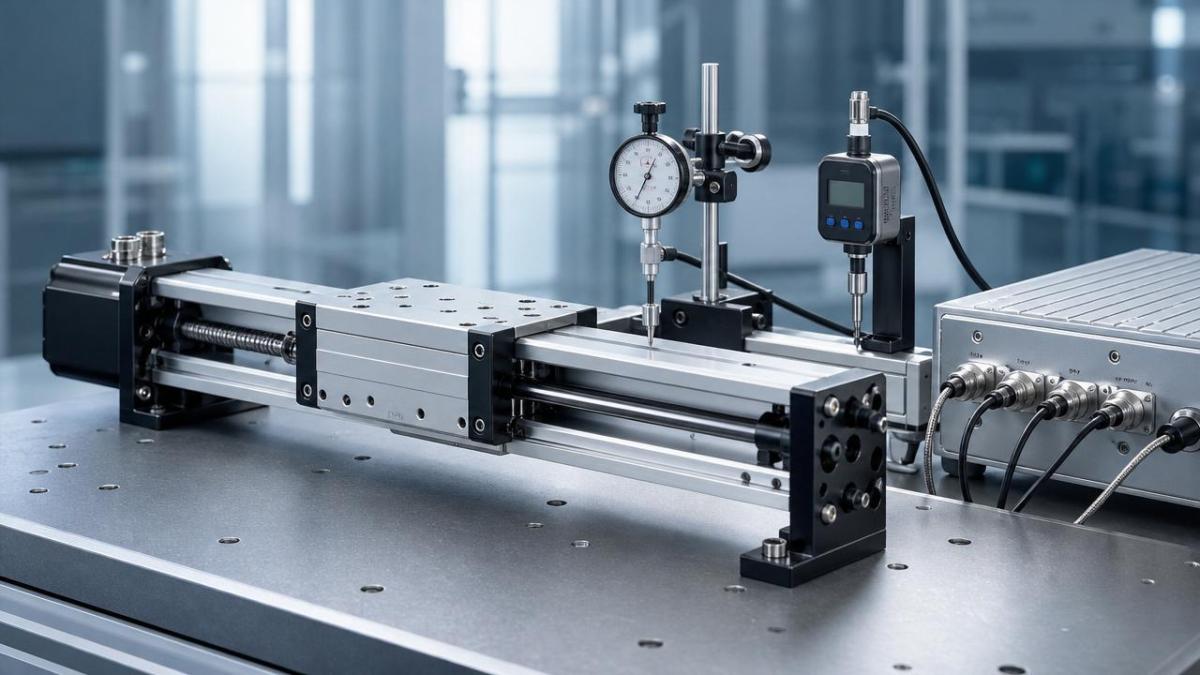
In general industry, a linear actuator rarely works alone. It is part of a motion chain that may include guides, couplings, sensors, PLC logic, drives, valves, and human-machine interfaces. If positioning accuracy shifts, the visible problem may appear at the tool point, fixture, dosing head, gate, or inspection station rather than inside the actuator itself.
For operators, the impact is immediate: missed end positions, uneven product handling, unstable cycle timing, and increased manual correction. For maintenance teams, inaccurate motion often leads to repeated troubleshooting because the root cause can come from mechanics, controls, feedback, installation, or environment.
This is why linear actuator positioning accuracy should be verified as a repeatable maintenance activity, not only during commissioning. In sectors linked to precision motion control, semiconductor support systems, process skids, automated handling, and digitalized industrial lines, even a small deviation can affect yield, traceability, and safety margins.
- Repeatability risk: the actuator may return to slightly different positions over multiple cycles, causing variation in alignment or contact force.
- Quality risk: inaccurate travel can affect dispensing volume, pick-and-place position, clamping, sealing, or inspection geometry.
- Safety risk: if home, limit, or stop positions are unreliable, operators may face unexpected motion or collision near guarded zones.
- Cost risk: teams may replace motors or controllers too early when the actual issue is backlash, mounting shift, or sensor drift.
What should operators measure when verifying linear actuator positioning accuracy?
Before testing, separate the idea of “accuracy” into measurable elements. Many teams use the term loosely, but good verification depends on knowing whether the issue is absolute position error, repeatability, backlash, hysteresis, or lost motion under load. A simple checklist reduces confusion and improves troubleshooting speed.
Key measurement terms
The table below helps operators interpret linear actuator positioning accuracy in practical maintenance language rather than only in catalog wording.
This distinction matters during fault isolation. A unit may show excellent repeatability yet still miss the intended coordinate because scaling, homing, encoder reference, or mechanical offset is wrong. Another unit may reach the correct target once, but fail under continuous cycling because wear or thermal growth is changing the result.
How to verify linear actuator positioning accuracy step by step
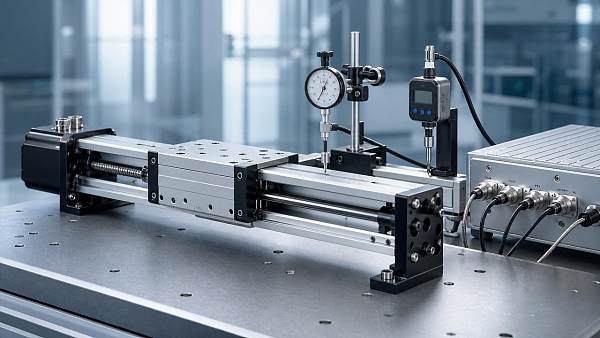
The most reliable method is a structured routine that compares commanded travel with measured travel at multiple points and in both directions. This approach works across electric linear actuators, ball screw systems, belt-driven axes, rod-style actuators, and guided assemblies, with adjustments for application risk and tolerance level.
- Stabilize the machine condition. Confirm mounting is tight, guides are lubricated as specified, and loads reflect normal production conditions.
- Define the reference standard. Use a calibrated dial indicator, digital indicator, linear scale, laser measuring device, or comparable traceable instrument suitable for the required tolerance.
- Set a repeatable datum or home point. Poor homing logic can make every later reading meaningless, so verify the home sequence first.
- Test several positions across the full stroke. Include near-home, mid-stroke, and end-of-stroke points rather than only one target.
- Approach each point from both directions. This is essential for identifying backlash, compliance, and direction-dependent error.
- Repeat each move multiple times. A single pass can hide instability. A series of cycles reveals scatter and drift.
- Record temperature, speed, load, and controller settings. Positioning error often changes with operating conditions.
A practical test sequence for operators
If no advanced metrology tool is available, teams can still build a disciplined verification routine using basic instruments and a consistent procedure.
- Command the actuator to move to 10%, 50%, and 90% of stroke.
- At each target, measure actual position and record deviation from the command.
- Repeat the same points at production speed and at reduced speed to see whether servo tuning or inertia changes the result.
- Run at least five cycles per point from both directions to compare repeatability and directional bias.
In high-value sectors monitored by G-CST, this kind of structured verification supports better benchmarking across motion platforms, especially when comparing components used in digitalized production assets, precision transfer modules, or integrated equipment skids where reliability is tied to procurement decisions.
Which tools and conditions produce trustworthy results?
Trustworthy verification depends on matching the measurement method to the risk level. A packaging line stop gate and a semiconductor support handling axis do not require the same inspection depth. Operators should choose tools based on tolerance, stroke length, load, and environmental sensitivity.
The table below compares common options for checking linear actuator positioning accuracy in field conditions and controlled maintenance environments.
A frequent mistake is to trust internal encoder feedback without checking the load point. If couplings slip, screws wear, belts stretch, or mounting plates flex, the controller may report a stable position while the process tool is off target. External verification remains essential.
Environmental factors to control
- Temperature changes can alter mechanical length and lubricant behavior, especially during long production shifts.
- Load variation can introduce deflection, especially with cantilevered tooling or off-center force.
- Vibration from nearby pumps, motors, or process equipment can affect fine measurements.
- Contamination can influence seals, guides, and limit sensors, leading to unstable readings over time.
What causes poor linear actuator positioning accuracy most often?
Most field problems come from combined causes rather than a single failure. Operators who only replace the actuator may miss issues in alignment, controls, or application loading. A cause-based review is more effective than part swapping.
Common root causes
- Mechanical wear in screw nuts, bearings, guides, or couplings creates backlash and direction-dependent error.
- Misalignment between actuator, guide, and load increases side force and uneven travel resistance.
- Improper servo tuning can produce overshoot, hunting, or poor settling at target positions.
- Weak homing strategy causes offset accumulation after restart, maintenance, or emergency stop recovery.
- Incorrect scaling or controller parameter changes translate good feedback into wrong commanded distance.
- Thermal expansion, insufficient lubrication, or contamination causes drift during long duty cycles.
G-CST’s benchmarking perspective is useful here because motion accuracy should not be judged in isolation. In advanced industrial environments, actuator performance interacts with bearing quality, digital twin assumptions, controller data visibility, and materials exposed to heat, chemicals, or clean-process constraints.
How should buyers and operators compare actuator solutions before replacement?
When an axis repeatedly fails accuracy checks, replacement may be necessary. But procurement should compare more than nominal travel and thrust. The real question is whether the new unit can hold linear actuator positioning accuracy under your actual duty cycle, load path, and compliance requirements.
This comparison framework helps maintenance and purchasing teams align technical and commercial decisions.
A lower initial purchase price can become expensive if the selected unit loses repeatability quickly or requires frequent recalibration. In high-compliance projects, buyers should also consider applicable ISO, ASME, IEEE, or sector-specific documentation needs when integrating the axis into a wider system.
What standards, documentation, and data practices improve confidence?
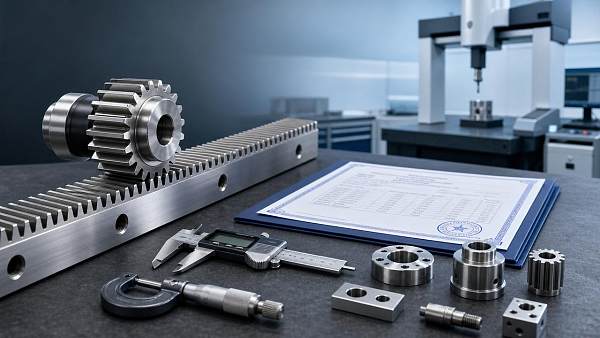
Operators do not always control procurement policy, but they benefit when equipment is delivered with clear motion documentation. Verification records, calibration traceability, controller parameter backups, and inspection methods all reduce ambiguity during future maintenance.
Recommended documentation set
- Commissioning baseline showing measured accuracy and repeatability at defined positions.
- Controller parameter archive including scaling, homing logic, acceleration, and position loop settings.
- Maintenance intervals for lubrication, inspection, and wear components.
- Instrument calibration references for any device used to verify linear actuator positioning accuracy.
- Change log for mechanical replacement, firmware updates, or process load modifications.
This data discipline aligns with the G-CST approach: verifiable engineering evidence, cross-functional benchmarking, and reduced decision risk. For operators, that means faster root-cause analysis. For buyers, it means fewer disputes over whether a performance issue is product-related, installation-related, or application-related.
FAQ: common questions about linear actuator positioning accuracy
How often should linear actuator positioning accuracy be checked?
It depends on duty cycle, process criticality, and environmental stress. Critical precision axes may need scheduled checks monthly or after any major maintenance event. General automation systems often benefit from quarterly verification, plus immediate checks after collision, abnormal noise, or repeated position alarms.
Is repeatability more important than absolute accuracy?
Not always. If the process uses a fixed taught location and stays within tolerance, repeatability may matter more day to day. But if the actuator must align to a known coordinate, interface with multiple stations, or support interchangeable tooling, absolute accuracy becomes equally important.
Can controller feedback alone confirm true position?
No. Internal feedback is valuable, but it may not reveal mechanical compliance, coupling slip, or tool-point error. For that reason, external measurement at the load point is still the preferred way to confirm true linear actuator positioning accuracy.
What is the most common mistake during verification?
Testing only one position and one direction. That can hide backlash, scaling problems, and thermal drift. A better method checks multiple stroke points, both directions, repeated cycles, and normal operating load.
Why choose us for verification support, benchmarking, and next-step decisions?
G-CST supports industrial teams that need more than a generic explanation of linear actuator positioning accuracy. Our value lies in connecting motion performance with broader engineering realities: component benchmarking, compliance context, materials exposure, digital diagnostics, and supply-chain decision risk across advanced industrial sectors.
If your team is evaluating unstable axis behavior, preparing a replacement decision, or trying to standardize verification methods across sites, we can help structure the technical review. That may include parameter confirmation, actuator selection criteria, measurement method comparison, delivery risk discussion, documentation expectations, and compatibility questions tied to broader system architecture.
- Request support for parameter confirmation when commanded travel and actual travel do not match.
- Discuss product selection based on stroke, load, repeatability target, environment, and maintenance access.
- Review delivery cycle concerns for replacement components in time-sensitive industrial projects.
- Compare custom solution paths when standard actuators do not fit accuracy, contamination, or installation requirements.
- Clarify documentation and certification expectations relevant to your application and procurement process.
- Open a quotation discussion with enough technical context to avoid under-specified purchasing decisions.
For operators and maintenance teams, better verification starts with better evidence. For procurement and engineering leaders, better evidence leads to better decisions. That is the practical route to more stable linear actuator positioning accuracy, less unplanned downtime, and stronger long-term system reliability.
Recommended News
 Jun 14, 2026LED Commercial Lighting: How to Compare ROI, Lifespan, and MaintenanceLED commercial lighting comparison starts with ROI, lifespan, and maintenance. Learn how to assess lifecycle cost, failure risk, and supplier claims for smarter facility decisions.
 Jun 12, 2026Best Pet Grooming Clippers for Coat Type and Daily Usepetgroomingclippers guide: discover how to choose the best clipper by coat type, power, blade control, and daily grooming needs for smoother, safer, more reliable results.
 Jun 07, 2026Audio Equipment Setup Mistakes That Hurt Sound QualityAudio equipment not delivering the sound you expected? Discover the most common setup mistakes in placement, signal flow, power, and room acoustics—and how to fix them fast.
 May 27, 2026Robotic Programming Software Wholesale: Key Integration ChecksRobotic programming software wholesale: compare PLC, SCADA, digital twin, and compliance integration checks to reduce risk, improve uptime, and choose scalable software with confidence.
 May 23, 2026Impact of EV on Motor Precision in 2026 ApplicationsImpact of EV on motor precision in 2026: discover a practical checklist for evaluating thermal drift, torque ripple, encoder accuracy, and control stability across key industries.
 May 23, 2026Miniaturization of Motion Systems: Key Design Trade-OffsMiniaturization of motion systems explained: explore the key design trade-offs in stiffness, thermal stability, load capacity, and control accuracy to evaluate compact platforms with confidence.
 May 23, 2026Industrial Automation Motion News: 2026 Trends to WatchIndustrial automation motion news for 2026 reveals key trends in precision, resilience, and smart integration. Discover scenario-based insights to guide compliant, scalable investment decisions.
 May 22, 2026Motion Control System Latency and Its Impact on Cycle TimeMotion control system latency directly affects cycle time, accuracy, and throughput. Learn where delays hide, how to diagnose them, and practical ways to boost performance.
 May 21, 2026Servo Drive Frequency Response: What Limits ControlServo drive frequency response explained: learn what limits control bandwidth, from motor physics and encoders to stiffness and backlash, and how to choose the right tradeoff for real-world performance.
 May 21, 2026Linear Motor Peak Force Data for Safe SizingLinear motor peak force data explained for safe sizing: learn how to verify duration, duty cycle, cooling, and drive limits to reduce risk and choose the right motion system.
 May 21, 2026How to Verify Linear Actuator Positioning AccuracyLinear actuator positioning accuracy explained with practical test steps, tools, and troubleshooting tips to reduce drift, improve repeatability, and keep motion systems reliable.
 May 20, 2026Choosing a Cam Follower OEM Manufacturer for Lower FailuresCam follower OEM manufacturer selection impacts uptime, failure rates, and lifecycle cost. Learn how to identify a reliable partner with proven quality, traceability, and engineering support.
 May 20, 2026How to Evaluate a Precision Rack and Pinion Supplier in 2026Precision rack and pinion supplier evaluation in 2026: learn how to compare accuracy, traceability, quality systems, and supply resilience to choose a reliable partner.
 May 19, 2026Linear Motor Supplier Red Flags in High-Speed AutomationLinear motor supplier warning signs can make or break high-speed automation. Discover the key red flags in validation, compliance, supply stability, and support before you buy.
 May 19, 2026How to Vet a Stepper Motor Factory for Stable OutputStepper motor factory selection starts with stable output. Learn how to audit capacity, quality control, traceability, and delivery performance to reduce sourcing risk.
 May 19, 2026Direct Drive Motor OEM: Precision vs Heat Trade-OffsDirect drive motor OEM evaluation starts with precision vs heat. Learn what to verify in torque, cooling, encoder drift, and long-duty accuracy before choosing a reliable supplier.
 May 18, 2026Linear Actuator Supplier Guide for Load, Speed, and Duty Cycle FitLinear actuator supplier guide: learn how to match load, speed, and duty cycle for reliable performance, lower risk, and smarter supplier selection.
 May 18, 2026Precision Ball Screw Factory Audit Checklist Before Volume OrdersPrecision ball screw factory audit checklist for volume buyers: verify process control, traceability, quality systems, capacity, and delivery reliability before costly sourcing mistakes.
 May 18, 2026Servo Motor OEM Manufacturer Selection for Stable High-Speed AutomationServo motor OEM manufacturer selection is critical for stable high-speed automation. Learn how to compare reliability, integration support, and lifecycle value before you buy.
 May 16, 2026How to Read Solenoid Valve Cycle Life Data CorrectlySolenoid valve cycle life data explained clearly: learn how to compare test claims, spot hidden limits, and choose valves more confidently for reliable performance.
 May 15, 2026Valve Actuator Response Time: What Delays Really MeanValve actuator response time explained: discover what delays really mean for process stability, safety, and control accuracy—and how to evaluate suppliers with confidence.
 May 14, 2026Pneumatic Actuator Supplier Checklist for Control Accuracy and MaintenancePneumatic actuator supplier checklist for better control accuracy and lower maintenance risk. Compare torque data, seals, materials, and support before you buy.
 May 13, 2026Actuated Ball Valve Supplier: 5 Failure Points to CheckActuated ball valve supplier guide: discover 5 critical failure points to check, from actuator delay to seal wear, to reduce downtime, improve troubleshooting, and extend valve life.
 May 13, 2026Butterfly Valve OEM Factory Selection for Fast Cycle ControlButterfly valve OEM factory selection for fast cycle control: compare response speed, sealing stability, torque consistency, and traceable quality to source reliable, high-performance valves.