Search News
Industry Portal
Popular Tags
How to Read Solenoid Valve Cycle Life Data Correctly
Author
Time
Click Count
Interpreting solenoid valve cycle life data correctly is essential for technical evaluation across industrial systems, fluid control platforms, and reliability-driven equipment programs.
A high cycle count alone does not guarantee field durability, stable sealing, or acceptable maintenance intervals under real operating conditions.
This guide explains how to read solenoid valve cycle life data in context, compare specifications intelligently, and identify the hidden limits behind test claims.
Understanding What Solenoid Valve Cycle Life Data Actually Measures
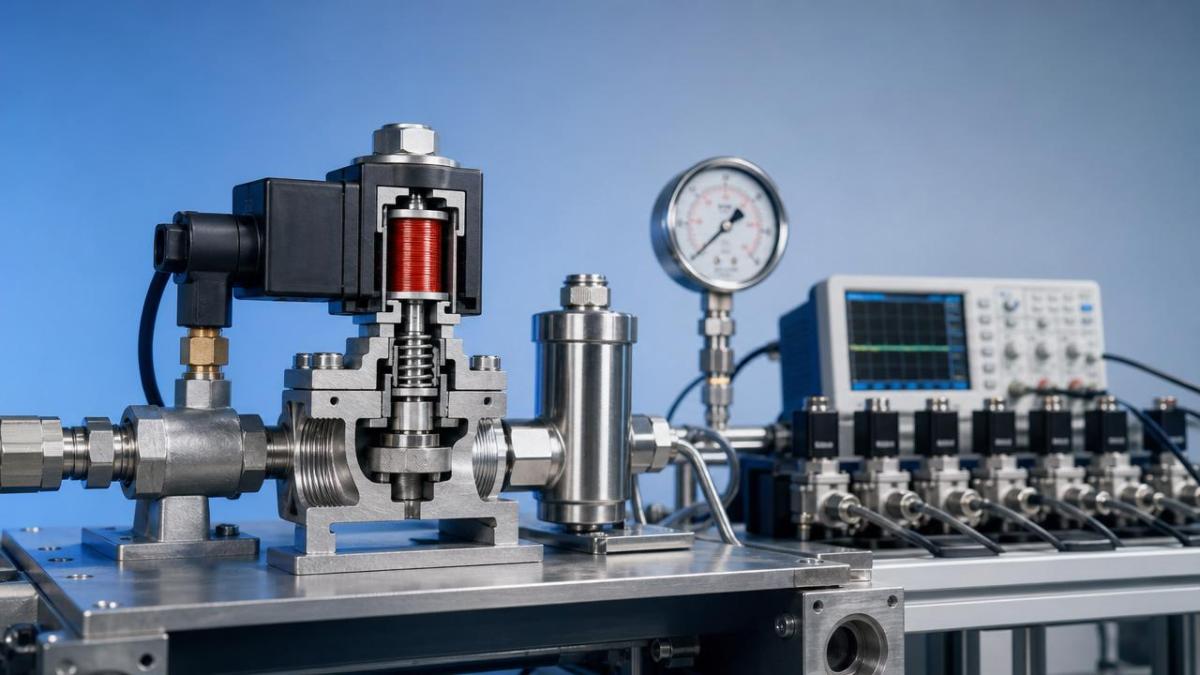
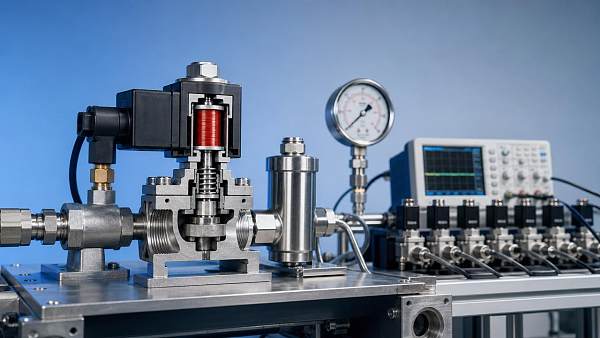
Solenoid valve cycle life data usually describes how many switching cycles a valve completes before defined failure criteria appear during controlled testing.
A cycle normally means one full actuation event: energize, move, seat, de-energize, return, and reseal under specified pressure conditions.
However, test methods differ widely between brands, product families, media types, and valve constructions.
Because of that, solenoid valve cycle life data should never be read as a universal durability number.
It is a conditional result linked to voltage, pressure, media cleanliness, ambient temperature, mounting orientation, and switching frequency.
Core elements behind the number
- Test medium: air, water, oil, steam, inert gas, or aggressive chemical fluid
- Operating pressure: minimum, nominal, and maximum differential pressure
- Duty cycle: continuous energized state or intermittent switching
- Coil conditions: rated voltage, heat rise, and power tolerance
- Failure threshold: leakage, slow response, coil burnout, or seal wear
Without these details, solenoid valve cycle life data has limited comparison value.
Why the Industry Pays Attention to Solenoid Valve Cycle Life Data
In modern industrial systems, small valve failures can trigger production stops, contamination risks, safety events, or unstable process quality.
That is why solenoid valve cycle life data matters across semiconductor tools, water treatment skids, packaging lines, process automation, and energy infrastructure.
The data supports broader reliability frameworks used in ISO, ASME, SEMI, and plant maintenance documentation.
Cycle life claims are therefore part of a bigger technical risk picture, not a standalone buying shortcut.
How to Compare Solenoid Valve Cycle Life Data Without Misreading It
The first rule is simple: compare like with like.
A valve rated for ten million cycles in dry air may underperform a lower-rated valve designed for contaminated water or viscous oil service.
Key comparison checks
- Check whether the reported cycles were tested under load or without meaningful pressure.
- Confirm the medium, because seal swelling and friction vary by fluid chemistry.
- Review switching frequency, since rapid actuation changes temperature and impact wear.
- Look for leakage limits, not only whether the valve still moves.
- Confirm coil voltage tolerance and ambient temperature during the test.
Many specification sheets present solenoid valve cycle life data as a headline figure, while important test boundaries appear only in footnotes.
Those footnotes often determine whether the data is relevant to a real installation.
Typical hidden limitations
- Clean laboratory media only
- Stable room temperature only
- Vertical mounting only
- Intermittent duty only
- No vibration or pressure pulsation
Business Value of Reading Solenoid Valve Cycle Life Data in Context
Correct interpretation improves more than technical accuracy. It also supports cost control, compliance confidence, and stronger long-term asset decisions.
When solenoid valve cycle life data is read properly, maintenance intervals become more realistic and replacement timing becomes less reactive.
This reduces unplanned downtime, unnecessary over-specification, and emergency inventory pressure.
For data-driven technical benchmarking, context-rich solenoid valve cycle life data is far more valuable than headline marketing numbers.
Typical Scenarios Where Solenoid Valve Cycle Life Data Is Interpreted Differently
Not every application stresses a valve in the same way, so the same cycle rating can imply very different service outcomes.
This is why solenoid valve cycle life data should always be mapped to the actual duty profile, not read in isolation.
Practical Guidelines for Reviewing Test Claims and Datasheets
A disciplined review method helps separate credible engineering evidence from broad promotional language.
Checklist for technical review
- Request the exact test setup for the published solenoid valve cycle life data.
- Verify whether the test used end-of-life leakage criteria or only functional motion criteria.
- Ask whether the valve was tested with representative contaminants or perfectly clean media.
- Check if life data reflects the complete valve assembly, not just the coil or seal material.
- Confirm whether accelerated testing introduced stress patterns absent in real service.
Also review adjacent specifications such as ingress protection, insulation class, response time, and allowable pressure ripple.
These factors often explain why similar solenoid valve cycle life data can produce different field reliability results.
Next-Step Framework for More Defensible Valve Selection
A practical next step is to convert operating conditions into a simple duty profile before comparing suppliers or valve families.
- Define annual switching volume and peak switching frequency.
- Document medium chemistry, cleanliness, and temperature range.
- State allowable leakage and response tolerance at end of life.
- Compare solenoid valve cycle life data only after normalizing those conditions.
- Use pilot validation when the application carries high downtime or contamination risk.
The most reliable decision comes from combining published data, application context, and realistic acceptance criteria.
When interpreted properly, solenoid valve cycle life data becomes a useful engineering tool for reliability, not just a catalog headline.
Recommended News
 May 27, 2026Robotic Programming Software Wholesale: Key Integration ChecksRobotic programming software wholesale: compare PLC, SCADA, digital twin, and compliance integration checks to reduce risk, improve uptime, and choose scalable software with confidence.
 May 23, 2026Impact of EV on Motor Precision in 2026 ApplicationsImpact of EV on motor precision in 2026: discover a practical checklist for evaluating thermal drift, torque ripple, encoder accuracy, and control stability across key industries.
 May 23, 2026Miniaturization of Motion Systems: Key Design Trade-OffsMiniaturization of motion systems explained: explore the key design trade-offs in stiffness, thermal stability, load capacity, and control accuracy to evaluate compact platforms with confidence.
 May 23, 2026Industrial Automation Motion News: 2026 Trends to WatchIndustrial automation motion news for 2026 reveals key trends in precision, resilience, and smart integration. Discover scenario-based insights to guide compliant, scalable investment decisions.
 May 22, 2026Motion Control System Latency and Its Impact on Cycle TimeMotion control system latency directly affects cycle time, accuracy, and throughput. Learn where delays hide, how to diagnose them, and practical ways to boost performance.
 May 21, 2026Servo Drive Frequency Response: What Limits ControlServo drive frequency response explained: learn what limits control bandwidth, from motor physics and encoders to stiffness and backlash, and how to choose the right tradeoff for real-world performance.
 May 21, 2026Linear Motor Peak Force Data for Safe SizingLinear motor peak force data explained for safe sizing: learn how to verify duration, duty cycle, cooling, and drive limits to reduce risk and choose the right motion system.
 May 21, 2026How to Verify Linear Actuator Positioning AccuracyLinear actuator positioning accuracy explained with practical test steps, tools, and troubleshooting tips to reduce drift, improve repeatability, and keep motion systems reliable.
 May 20, 2026Choosing a Cam Follower OEM Manufacturer for Lower FailuresCam follower OEM manufacturer selection impacts uptime, failure rates, and lifecycle cost. Learn how to identify a reliable partner with proven quality, traceability, and engineering support.
 May 20, 2026How to Evaluate a Precision Rack and Pinion Supplier in 2026Precision rack and pinion supplier evaluation in 2026: learn how to compare accuracy, traceability, quality systems, and supply resilience to choose a reliable partner.
 May 19, 2026Linear Motor Supplier Red Flags in High-Speed AutomationLinear motor supplier warning signs can make or break high-speed automation. Discover the key red flags in validation, compliance, supply stability, and support before you buy.
 May 19, 2026How to Vet a Stepper Motor Factory for Stable OutputStepper motor factory selection starts with stable output. Learn how to audit capacity, quality control, traceability, and delivery performance to reduce sourcing risk.
 May 19, 2026Direct Drive Motor OEM: Precision vs Heat Trade-OffsDirect drive motor OEM evaluation starts with precision vs heat. Learn what to verify in torque, cooling, encoder drift, and long-duty accuracy before choosing a reliable supplier.
 May 18, 2026Linear Actuator Supplier Guide for Load, Speed, and Duty Cycle FitLinear actuator supplier guide: learn how to match load, speed, and duty cycle for reliable performance, lower risk, and smarter supplier selection.
 May 18, 2026Precision Ball Screw Factory Audit Checklist Before Volume OrdersPrecision ball screw factory audit checklist for volume buyers: verify process control, traceability, quality systems, capacity, and delivery reliability before costly sourcing mistakes.
 May 18, 2026Servo Motor OEM Manufacturer Selection for Stable High-Speed AutomationServo motor OEM manufacturer selection is critical for stable high-speed automation. Learn how to compare reliability, integration support, and lifecycle value before you buy.
 May 16, 2026How to Read Solenoid Valve Cycle Life Data CorrectlySolenoid valve cycle life data explained clearly: learn how to compare test claims, spot hidden limits, and choose valves more confidently for reliable performance.
 May 15, 2026Valve Actuator Response Time: What Delays Really MeanValve actuator response time explained: discover what delays really mean for process stability, safety, and control accuracy—and how to evaluate suppliers with confidence.
 May 14, 2026Pneumatic Actuator Supplier Checklist for Control Accuracy and MaintenancePneumatic actuator supplier checklist for better control accuracy and lower maintenance risk. Compare torque data, seals, materials, and support before you buy.
 May 13, 2026Actuated Ball Valve Supplier: 5 Failure Points to CheckActuated ball valve supplier guide: discover 5 critical failure points to check, from actuator delay to seal wear, to reduce downtime, improve troubleshooting, and extend valve life.
 May 13, 2026Butterfly Valve OEM Factory Selection for Fast Cycle ControlButterfly valve OEM factory selection for fast cycle control: compare response speed, sealing stability, torque consistency, and traceable quality to source reliable, high-performance valves.
 May 12, 2026Solenoid Valve OEM Supplier Options for Stable Lead Time in 2026Solenoid valve OEM supplier options for 2026: learn how to compare lead time stability, quality control, and supply continuity to choose a reliable partner with confidence.
 May 12, 2026High Pressure Control Valve OEM: Key Tests Before Final ApprovalHigh pressure control valve OEM selection should be test-driven. Learn the key approval checks for sealing, pressure stability, materials, and actuator performance before you buy.
 May 12, 2026Sanitary Valve Wholesale: 7 Spec Mistakes That Delay ApprovalSanitary valve wholesale approvals often fail over small spec gaps. Discover 7 costly mistakes, avoid compliance delays, and speed up safer sourcing with this practical guide.