Search News
Industry Portal
Popular Tags
Lithography Light Source Wavelength Data: How to Judge Tool Fit and Process Window

Author
Time
Click Count
For enterprise decision-makers evaluating lithography investments, lithography light source wavelength data is more than a technical parameter—it is a practical signal of tool compatibility, yield stability, and process-window flexibility. Understanding how wavelength affects resolution, overlay control, resist performance, and upgrade paths helps procurement and engineering teams compare platforms with greater confidence and reduce long-term manufacturing risk.
In semiconductor fabrication equipment procurement, wavelength data should never be isolated from the rest of the process stack. A 365 nm i-line system, a 248 nm KrF platform, a 193 nm ArF scanner, and an EUV system at 13.5 nm may all be valid choices, but each serves a different node strategy, capital model, and qualification timeline. For B2B buyers, the real question is not which wavelength is “best,” but which wavelength aligns with target geometry, resist ecosystem, overlay budget, uptime expectations, and export-control exposure.
For organizations tracking advanced manufacturing risks across global supply chains, lithography light source wavelength data also functions as a benchmarking layer. It informs whether a tool can support legacy products for 5–10 years, whether it can be redeployed across multiple fabs, and whether future process migration will require a full platform replacement or only a partial upgrade. That makes wavelength analysis a board-level issue as much as an engineering one.
Why Wavelength Data Is a Strategic Procurement Indicator
[[IMG:img_01]]In practical procurement reviews, lithography light source wavelength data affects at least 4 core decision areas: achievable resolution, depth of focus, resist compatibility, and process-window robustness. Shorter wavelengths generally enable smaller feature patterning, but they also increase requirements for optics, contamination control, mask quality, and process integration discipline. A lower nominal wavelength does not automatically mean lower total manufacturing risk.
Tool fit should therefore be judged against production intent. A fab serving analog, power, MEMS, display backplane, or mature logic products may obtain stronger return from 248 nm or 365 nm platforms if layer count, throughput, and consumable availability remain favorable. By contrast, sub-40 nm critical layers often push buyers toward 193 nm immersion or more advanced patterning strategies where process latitude becomes a decisive factor.
What Procurement Teams Should Read Behind the Wavelength Number
Wavelength is only one line in a specification sheet, yet it signals the complexity level of the entire ecosystem. As wavelength decreases from 365 nm to 248 nm and then to 193 nm or 13.5 nm, buyers should expect tighter environmental requirements, more sensitive photoresist behavior, stricter mask standards, and in many cases a narrower tolerance for process drift. Qualification may expand from 4–8 weeks to several months depending on node and layer criticality.
- Resolution capability must be checked against actual design rules, not theoretical minimum pitch alone.
- Overlay performance should be reviewed layer by layer, especially for multi-patterning or dense interconnect structures.
- Resist and track co-optimization can influence yield more than the headline wavelength itself.
- Facility readiness, including vibration, air cleanliness, and thermal control, may become a hidden cost driver.
The following comparison helps enterprise buyers interpret lithography light source wavelength data in a more operational way rather than as a single physics metric.
The key conclusion is that lithography light source wavelength data must be tied to production mix and lifecycle economics. In many industrial and automotive programs, the most resilient decision is not the shortest wavelength, but the wavelength that preserves a stable process window over 3–7 years of continuous production.
A Practical Rule for Board-Level Reviews
If more than 60% of planned revenue depends on mature-node products, buyers should prioritize installed-base supportability, spare part horizon, and resist continuity before paying a premium for excessive patterning capability. If more than 30% of the roadmap depends on geometry shrink within 24 months, then wavelength flexibility and upgrade path deserve a higher weighting in the capital approval model.
How Wavelength Shapes Tool Fit and Process Window
From an engineering and operations perspective, tool fit means the ability to run target layers with acceptable CD uniformity, overlay accuracy, defect density, and throughput under normal fab conditions. Process window refers to how much variation in exposure dose, focus, resist thickness, and environmental drift the process can tolerate before yield degrades. This is where lithography light source wavelength data becomes directly actionable.
Resolution Is Only the First Filter
Shorter wavelengths improve theoretical resolution, but enterprise buyers should validate whether the gain is usable in production. For example, a platform may support a smaller feature target under optimized conditions, yet require tighter focus control or more aggressive OPC and mask management to maintain repeatability. A process that works in a pilot line for 200 wafers may behave differently at 20,000 wafers per month.
The practical buying question is whether the process window remains wide enough for stable volume manufacturing. A narrow process window increases rework risk, metrology burden, and line-side engineering intervention. Even a 1%–2% yield swing on high-value wafers can materially change annual cost-of-poor-quality in a multi-tool fab.
Overlay, Resist, and Throughput Must Be Evaluated Together
Overlay budgets become more demanding as critical dimensions shrink. However, wavelength alone does not determine overlay performance; stage precision, alignment strategy, thermal stability, and track-litho integration all contribute. That is why procurement teams should request layer-specific overlay data, not just a single best-case specification from a demo environment.
Resist compatibility is another hidden differentiator. Some wavelengths benefit from broader resist familiarity and easier process transfer between fabs, while more advanced wavelengths can demand narrower chemistry windows and stronger contamination control. Throughput can also vary depending on dose requirements, source power stability, and maintenance intervals, which may range from daily checks to scheduled service windows every few hundred operating hours.
Four Questions That Expose Process-Window Risk
- What is the acceptable focus and dose latitude for the top 3 critical layers?
- How does defectivity change across 8-hour, 24-hour, and 7-day production runs?
- What resist and track combinations are already qualified in comparable fab conditions?
- How much overlay drift appears after preventive maintenance or source replacement events?
The table below translates lithography light source wavelength data into a process-window review framework suitable for cross-functional sourcing teams.
This framework helps sourcing teams move beyond headline resolution. In many cases, the tool with a wider process window delivers better business value than the tool with the most aggressive nominal capability, especially where staffing, fab environment, or product diversity increases operating variability.
A Decision Framework for Comparing Platforms
A disciplined comparison of lithography platforms should combine technical fit, commercial resilience, and long-horizon operability. For enterprise decision-makers, a 5-part review model is often more reliable than relying on a vendor’s peak specification. This approach is especially useful when balancing new fabs, brownfield upgrades, and dual-sourcing strategies across regions.
Five Evaluation Lenses
- Node and product fit: confirm whether the wavelength supports the actual top 10 revenue layers, not just future aspirations.
- Process-window margin: review focus, dose, and overlay robustness under volume conditions.
- Lifecycle support: assess spare parts, field service response, and source module replacement horizon over 5–8 years.
- Infrastructure burden: estimate cleanroom, utilities, vibration, and contamination-control upgrades needed for installation.
- Regulatory and supply-chain exposure: map export controls, single-source materials, and regional service availability.
When a Lower-Wavelength Tool May Be the Wrong Investment
A more advanced wavelength can be a poor fit if the fab lacks the metrology discipline to keep the process centered, if product demand remains concentrated in mature geometries, or if qualification resources are already constrained. For some manufacturers, the better decision is to deploy 2 stable mature-node tools instead of 1 higher-complexity system that introduces longer ramp-up, tighter maintenance tolerance, and slower operator readiness.
Decision-makers should also watch for hidden mismatch between capital plans and process architecture. If the selected wavelength requires substantial mask strategy changes, track upgrades, or contamination-control retrofits, the effective project cost may exceed the sticker price by 15%–30% once implementation friction is included.
Common Procurement Mistakes
- Comparing lithography light source wavelength data without checking resist and track co-qualification status.
- Using best-case demo metrics rather than 30-day or 90-day production stability evidence.
- Ignoring installed-base service density in the target geography.
- Underestimating the impact of source maintenance intervals on throughput planning.
- Approving a platform for one flagship product while overlooking mixed-product scheduling realities.
How G-CST Supports Enterprise Evaluation and Risk Reduction
For procurement directors, technical committees, and infrastructure investors, the value of lithography light source wavelength data increases when it is benchmarked alongside standards, component dependencies, and regional supply-chain constraints. This is where G-CST’s multidisciplinary model matters. By connecting semiconductor fabrication equipment analysis with precision motion systems, industrial software, fluid handling reliability, and advanced material considerations, decision-makers can evaluate platform risk as an integrated operational question rather than a single-tool purchase.
In practical terms, this means comparing not just exposure capability, but also uptime-critical sub-systems, maintenance windows, contamination-sensitive components, and digital monitoring maturity. A lithography decision can affect pump and valve service schedules, stage performance verification, clean chemical control, and real-time data traceability. Cross-domain benchmarking reduces the chance of approving a technically impressive platform that later proves difficult to sustain in production.
What Enterprise Buyers Should Request Before Approval
Before signing off on a capital program, request a structured package that includes wavelength-linked process capability by layer type, qualification assumptions, maintenance intervals, critical consumables list, and upgrade scenarios over a minimum 3-year horizon. For strategic fabs, a 5-year support view is preferable, especially when long-life industrial or automotive products are involved.
- Layer-specific performance data rather than only generic platform claims
- Service and spare parts response assumptions by region
- Facility readiness checklist with environmental thresholds
- Resist, mask, and track compatibility boundaries
- Scenario analysis for ramp-up delays, source replacement, and export-control changes
Lithography investments are too consequential to judge by wavelength alone, yet lithography light source wavelength data remains one of the most useful indicators for predicting tool fit, process-window resilience, and long-term manufacturability. Buyers who evaluate wavelength in context—resolution, overlay, resist ecosystem, infrastructure burden, and lifecycle support—make better capital decisions and reduce avoidable production risk.
G-CST helps enterprise teams turn technical specifications into investment-grade comparisons through verifiable engineering benchmarks, supply-chain intelligence, and cross-disciplinary evaluation logic. If your organization is assessing lithography platforms, upgrade paths, or fab readiness, contact us to obtain a tailored evaluation framework, review product details, or explore broader semiconductor equipment benchmarking solutions.
Recommended News
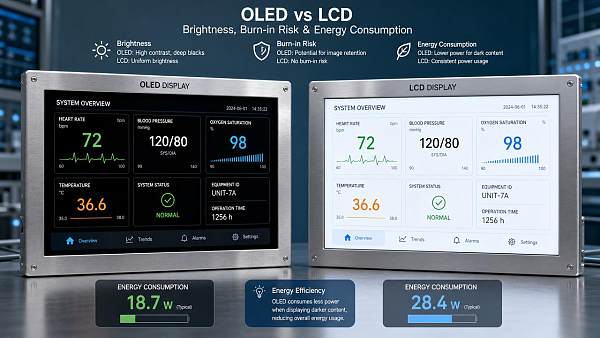
 Jun 13, 2026OLED Displays vs LCD: What Matters for Brightness, Burn-In, and PowerOLED displays vs LCD: compare sustained brightness, burn-in risk, and power behavior to choose the right display for industrial, commercial, and high-uptime systems.
 May 22, 2026Future of High-Speed Spindles: 2026 Performance Trade-OffsFuture of high-speed spindles in 2026: discover the real trade-offs between RPM, thermal stability, bearing life, energy use, and supplier support to make smarter buying decisions.
 May 22, 2026Precision Stage Repeatability Data: What Drift Is Acceptable?Precision stage repeatability data explained: learn what drift is acceptable, how to judge risk, and how to validate motion performance before it impacts yield, compliance, or long-term reliability.
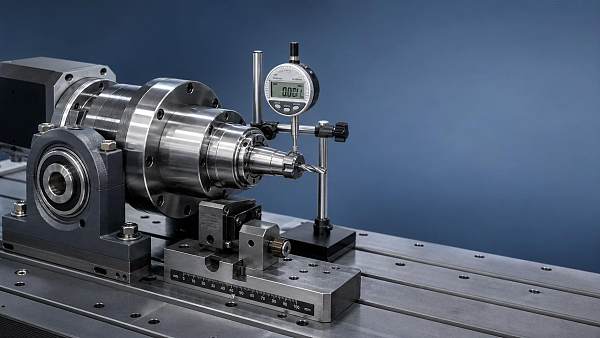
 May 21, 2026Spindle Run-Out Benchmarks That Matter in 2026Spindle run-out benchmarks that matter in 2026: learn the reference ranges, test criteria, and qualification checks that reduce risk, improve precision, and support smarter sourcing decisions.
 May 19, 2026Vibration Isolator Supplier Guide for Sensitive EquipmentVibration isolator supplier guide for sensitive equipment: learn how to compare performance data, materials, compliance, and lifecycle value to choose a reliable partner with confidence.
 May 18, 2026Cross Roller Bearing Factory Selection for Compact High-Precision StagesCross roller bearing factory selection guide for compact high-precision stages. Learn how to verify quality, preload control, compliance, and sourcing risk for reliable performance.
 May 09, 2026Global Metrology Tools Growth Data and Its Impact on Yield PlanningGlobal metrology tools growth data reveals how rising inspection demand shapes yield planning, process control, and equipment strategy—helping technical teams reduce risk and improve ROI.
 May 08, 2026The Future of High-NA EUV Technology and the Subsystems Most Likely to BottleneckFuture of High-NA EUV technology: discover which subsystems may become the biggest bottlenecks—from motion stages and metrology to vacuum control—and why they matter for yield, uptime, and smarter benchmarking.
![]() May 07, 2026Lithography Light Source Wavelength Data: How to Judge Tool Fit and Process WindowLithography light source wavelength data reveals how to judge tool fit, process window, yield risk, and upgrade paths—helping enterprise buyers compare platforms with confidence.
May 07, 2026Lithography Light Source Wavelength Data: How to Judge Tool Fit and Process WindowLithography light source wavelength data reveals how to judge tool fit, process window, yield risk, and upgrade paths—helping enterprise buyers compare platforms with confidence. May 06, 2026Die Bonder Factory Shortlist: What to Compare Beyond Unit PriceDie bonder factory selection should go beyond unit price. Compare yield stability, maintenance, compliance risk, and service support to reduce downtime and improve long-term ROI.
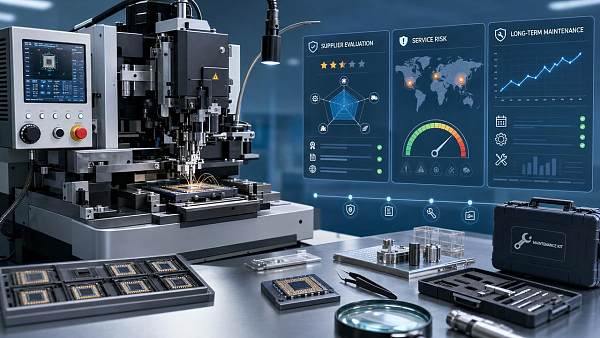
 May 06, 2026How to Compare a Wire Bonder Supplier Without Missing Hidden Service RisksWire bonder supplier comparison goes beyond price. Discover how to spot hidden service risks, protect uptime, and choose a partner with reliable long-term support.
 May 05, 2026Spin Coater Manufacturer Selection Mistakes That Hurt Coating UniformitySpin coater manufacturer selection mistakes can ruin coating uniformity. Learn what to check for better stability, fewer defects, and more reliable thin-film results.
 May 05, 2026Wafer Carrier Box Factory Checklist: Material, Cleanliness, and Lead TimeWafer carrier box factory checklist for buyers: compare material performance, cleanliness control, and lead time stability to reduce contamination risk and secure reliable supply.
 May 04, 2026Photoresist Coater Factory Audit Checklist for Consistent Coating QualityPhotoresist coater factory audit checklist for quality and safety teams: uncover contamination, calibration, EHS, and QC risks to improve coating consistency and supplier confidence.
 May 04, 2026What Sets a Reliable Lithography Light Source Supplier Apart in 2026Lithography light source supplier selection in 2026 demands more than price. Discover how reliability, compliance, service depth, and supply resilience protect yield, uptime, and ROI.
 May 02, 2026SEMI Standards for Semiconductor Equipment: Key Checks Before QualificationSEMI Standards for semiconductor equipment: learn the key pre-qualification checks for safety, automation, contamination control, reliability, and documentation before fab approval.
![]() Apr 21, 2026Where EUV Lithography Systems Lose Uptime FirstEUV Lithography Systems lose uptime first in precision motion control, high-performance bearings, and Industrial Software Solutions—learn benchmarking, maintainability, and compliance insights.
Apr 21, 2026Where EUV Lithography Systems Lose Uptime FirstEUV Lithography Systems lose uptime first in precision motion control, high-performance bearings, and Industrial Software Solutions—learn benchmarking, maintainability, and compliance insights.![]() Apr 21, 2026SEMI Standards Compliance Issues That Delay Equipment AcceptanceSEMI Standards issues can delay equipment acceptance across Precision Manufacturing. Learn how Digital Twin Technology, Strategic Procurement, Reliability Engineering, and Chemical Pumps affect faster approvals.
Apr 21, 2026SEMI Standards Compliance Issues That Delay Equipment AcceptanceSEMI Standards issues can delay equipment acceptance across Precision Manufacturing. Learn how Digital Twin Technology, Strategic Procurement, Reliability Engineering, and Chemical Pumps affect faster approvals.