Search News
Industry Portal
Popular Tags
SEMI Standards for Semiconductor Equipment: Key Checks Before Qualification

Author
Time
Click Count
Before a semiconductor tool enters formal qualification, technical evaluators need evidence that it can operate safely, integrate cleanly, support process stability, and meet documentation expectations under fab conditions. That is where SEMI Standards for semiconductor equipment become practical decision tools rather than abstract compliance references. For most evaluation teams, the key question is not whether a supplier mentions SEMI in a brochure, but whether the equipment demonstrably meets the specific SEMI requirements that affect installation approval, uptime risk, contamination control, and long-term supportability.
For technical assessment personnel, the highest-value pre-qualification checks usually fall into five areas: safety and ergonomics, communication and interoperability, contamination and materials compatibility, reliability and maintainability, and complete documentation for acceptance and ongoing operation. A tool can show excellent headline performance and still fail qualification if any of those areas are weak. In high-mix and high-investment fab environments, these gaps translate directly into schedule delays, retrofit cost, EHS exposure, or unstable production ramp.
This article focuses on the checks that matter most before qualification. Rather than listing standards at a high level, it explains how evaluators can use them to ask better questions, request the right evidence, and reduce uncertainty in equipment selection.
What technical evaluators are really trying to confirm before qualification

When buyers search for SEMI Standards for semiconductor equipment, they are usually not looking for a generic definition of SEMI. They want a practical framework for deciding whether a candidate tool is genuinely ready for fab introduction. In other words, the search intent is strongly transactional and evaluative: what must be checked, what evidence is acceptable, and what issues commonly appear before final approval.
Technical evaluators are often balancing several stakeholders at once. Process engineers want performance and repeatability. EHS teams want safety compliance and hazard mitigation. Facilities teams want utility compatibility and installation clarity. Automation teams want communication readiness. Procurement wants confidence that hidden compliance or support problems will not create lifecycle cost surprises. A useful qualification review therefore has to connect SEMI requirements to these operational concerns.
The practical outcome is simple: SEMI alignment should be treated as a risk-reduction filter. If the supplier cannot map the equipment design, interfaces, safety architecture, contamination controls, and documentation package to the relevant standards, qualification should not move forward without corrective action or a clear deviation review.
Start with SEMI standards that directly affect fab entry risk
Not every SEMI document will be equally important in every equipment category, so evaluators should begin with the standards most likely to affect installation and qualification risk. In many projects, the first screening layer includes safety guidelines, communication interfaces, and environmental or contamination-related requirements. This is where the largest disconnect often appears between supplier claims and fab expectations.
For safety, teams commonly review alignment with standards such as SEMI S2, which is widely used as a semiconductor equipment safety guideline, and may also consider related documents like SEMI S8 for ergonomics and SEMI S14 for fire risk assessment, depending on the equipment type. For environmental, health, and safety review, suppliers should be able to present a structured hazard analysis rather than simply stating compliance.
For equipment communication and automation compatibility, evaluators often look to SEMI E5 and SEMI E30, associated with SECS and GEM communication capabilities. If the tool must participate in host communication, recipe management, event reporting, and alarm handling within an automated fab environment, these are not optional discussion points. A machine that performs well mechanically but lacks robust interface readiness will create integration delays later.
Depending on the process domain, other SEMI standards may become critical, especially those affecting contamination, wafer handling, substrate tracking, and data exchange. The right question is not “Which standards does the supplier know?” but “Which standards are relevant to this tool’s actual fab role, and where is the objective evidence?”
Safety review: do not accept broad compliance claims without evidence
Among all qualification gates, safety is usually where the consequences of vague supplier responses are most serious. A technical evaluator should verify whether the tool has undergone a formal third-party or internal assessment against the relevant safety expectations and whether the supplier can provide a detailed compliance matrix. Marketing statements such as “designed per SEMI standards” are not enough.
Key checks include electrical safety architecture, emergency stop design, interlock logic, guarding, exhaust and chemical handling provisions, gas cabinet interfaces where applicable, thermal hazards, stored energy controls, and safe service access. If the tool uses hazardous chemicals, vacuum, plasma, lasers, or high-voltage subsystems, the review should be even more rigorous.
It is also important to confirm whether any residual risks remain after design mitigation. Qualified suppliers should be transparent about open points, procedural controls, required personal protective measures, and installation conditions needed to maintain safe operation. Hidden assumptions often surface during site acceptance, not factory acceptance, and that timing is costly.
Ergonomics should not be treated as a secondary issue. Service clearances, operator access, part-loading height, HMI readability, and maintenance reach can directly affect uptime, training burden, and injury risk. In practice, poor ergonomic design often shows up as longer preventive maintenance cycles, inconsistent technician execution, or unofficial workarounds on the fab floor.
Interoperability checks: can the tool communicate the way the fab actually operates?
One of the most underestimated qualification problems is incomplete automation readiness. A tool may support nominal SECS/GEM functions, yet still fail to integrate efficiently into the fab’s production control environment. Technical evaluators should therefore verify not just the existence of protocol support, but the completeness and maturity of the implementation.
Useful questions include: What collection events are available by default? How are alarms structured and documented? Can recipes be remotely selected, downloaded, verified, and version-controlled? Are variable definitions, state models, and equipment constants clearly documented? Does the supplier provide message maps, interface test support, and simulation options before installation?
Another important point is exception handling. Communication quality is proven less by normal-state messaging and more by how the tool behaves during aborts, interlocks, recipe mismatches, wafer handling errors, and restart events. Evaluators should request demonstration logs or interface test records that show the equipment can support real production scenarios, not just a passing factory demo.
If the fab roadmap includes higher levels of digital integration, data contextualization, or digital twin compatibility, the evaluation should also consider whether the tool’s software and data architecture can support future expansion. A minimal communication implementation may pass current qualification but still become a strategic limitation within one equipment generation.
Contamination control and materials compatibility: performance claims mean little if the tool threatens yield
For many technical evaluators, contamination risk is the decisive issue. A piece of semiconductor equipment can meet throughput and precision targets yet still be unacceptable if it introduces particles, outgassing, ionic contamination, chemical incompatibility, or unstable internal surfaces. In front-end and advanced packaging environments alike, contamination control must be examined at the component, subsystem, and operating-condition levels.
Start with the materials of construction in wetted areas, vacuum paths, wafer contact surfaces, seals, tubing, coatings, lubricants, and filtration elements. Request documentation on chemical compatibility, cleanroom suitability, particle generation characteristics, and any restrictions on process chemistries or maintenance materials. If the supplier has made substitutions during recent builds, that history matters because design drift can affect contamination performance.
Cleaning, passivation, packaging, and shipping protocols should also be reviewed. A well-designed tool can still arrive with avoidable contamination risk if pre-installation controls are weak. Evaluators should confirm whether the supplier has standardized cleaning procedures, incoming material controls, and contamination-sensitive assembly methods for critical modules.
When possible, ask for actual test evidence rather than general assurance. That may include particle data, vacuum integrity records, helium leak test results, outgassing information, chemical exposure validation, or substrate contact wear studies. The depth of evidence should match the criticality of the application. For yield-sensitive processes, trust in contamination control must be earned through traceable data.
Reliability and maintainability: qualification should predict lifecycle behavior, not just day-one acceptance
A common mistake in equipment qualification is overemphasizing initial functionality and underexamining long-term operational behavior. Technical evaluators should use the SEMI Standards for semiconductor equipment as part of a broader reliability review that asks whether the tool can maintain stable performance under real production duty cycles.
Relevant checks include mean time between failures, mean time to repair, preventive maintenance intervals, consumables life, calibration stability, and failure mode history from installed base data. If the supplier cannot provide field reliability evidence, evaluators should be cautious about accepting optimistic projections derived only from engineering estimates.
Maintainability deserves equal scrutiny. How accessible are high-failure components? Are replacement procedures standardized? What special tools are required? Can critical modules be swapped without disturbing alignment or contamination-sensitive areas? How long does recovery take after planned maintenance? These questions affect not just uptime but also the fab’s service staffing model and spare parts strategy.
Another useful check is software and firmware control discipline. Equipment reliability is increasingly tied to version management, patch control, rollback procedures, and alarm diagnosis quality. If the tool depends on frequent software intervention without strong change control, qualification risk is higher even if the hardware design is sound.
Documentation readiness is a qualification issue, not an administrative afterthought
In many projects, qualification slows down not because the equipment is fundamentally unsuitable, but because the documentation package is incomplete, inconsistent, or difficult to verify. For technical assessment teams, documentation is evidence of design maturity. A supplier that cannot present clear, current, and traceable documents is signaling execution risk.
At minimum, evaluators should expect a standards compliance matrix, utility requirements, installation drawings, P&ID or pneumatic schematics where relevant, electrical schematics, spare parts lists, preventive maintenance plans, operating procedures, alarm definitions, software/interface documentation, and safety-related manuals. Change history and revision control are especially important when reviewing multiple tool builds.
Acceptance criteria should also be documented early. What factory acceptance tests and site acceptance tests will be used? Which parameters must be demonstrated before handover? Which deviations are acceptable, and who approves them? Undefined acceptance logic creates avoidable disputes later, especially when process performance depends on site conditions.
For global sourcing and multinational fabs, document quality also affects scalability. Clear documentation reduces training time, supports spare strategy alignment across sites, and makes future audits far easier. In this sense, documentation readiness is not paperwork overhead; it is part of operational resilience.
A practical pre-qualification checklist for technical evaluation teams
To make SEMI-based review actionable, teams can use a simple pre-qualification structure. First, identify the exact equipment role, process environment, and fab integration requirements. Second, map the relevant SEMI standards to the tool’s design and interfaces. Third, request objective evidence for each critical area. Fourth, classify gaps as acceptable, correctable before FAT, or disqualifying.
The highest-value checklist items usually include the following: verified safety assessment status; hazard and residual risk documentation; communication protocol support and message documentation; materials compatibility and contamination evidence; utility and facility compatibility; reliability and maintainability data; complete controlled document package; and defined FAT/SAT acceptance criteria.
It is also wise to assess supplier responsiveness during the review itself. Fast, specific, technically grounded answers are often a positive predictor of post-purchase support quality. By contrast, repeated ambiguity, undocumented exceptions, or reliance on verbal assurances should be treated as risk indicators regardless of the tool’s advertised capabilities.
Finally, remember that qualification is not just a gate for a single purchase order. It is a filter for long-term operational fit. The strongest equipment decisions come from combining standards-based review with field evidence, application context, and realistic support expectations.
Conclusion: use SEMI standards to make qualification decisions more defensible
For technical evaluators, the real value of SEMI Standards for semiconductor equipment lies in turning broad equipment claims into verifiable qualification criteria. Before a tool enters the fab, teams should confirm not only that it can perform, but that it can do so safely, cleanly, interoperably, and sustainably within the fab’s operating model.
The most effective reviews focus on the areas where qualification failures are expensive: safety evidence, automation readiness, contamination control, reliability, maintainability, and documentation completeness. These are the checks that reveal whether a supplier is prepared for real semiconductor manufacturing expectations or merely prepared for a sales presentation.
In practical terms, SEMI alignment should help procurement and engineering teams ask better questions, document exceptions earlier, and compare suppliers on a more defensible basis. That is how standards support better decisions: not by replacing engineering judgment, but by giving it a stronger structure.
Recommended News
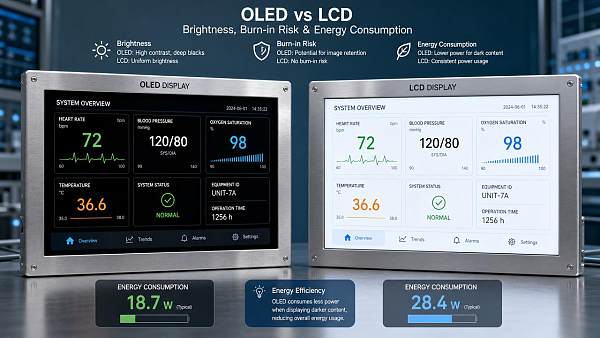
 Jun 13, 2026OLED Displays vs LCD: What Matters for Brightness, Burn-In, and PowerOLED displays vs LCD: compare sustained brightness, burn-in risk, and power behavior to choose the right display for industrial, commercial, and high-uptime systems.
 May 22, 2026Future of High-Speed Spindles: 2026 Performance Trade-OffsFuture of high-speed spindles in 2026: discover the real trade-offs between RPM, thermal stability, bearing life, energy use, and supplier support to make smarter buying decisions.
 May 22, 2026Precision Stage Repeatability Data: What Drift Is Acceptable?Precision stage repeatability data explained: learn what drift is acceptable, how to judge risk, and how to validate motion performance before it impacts yield, compliance, or long-term reliability.
 May 21, 2026Spindle Run-Out Benchmarks That Matter in 2026Spindle run-out benchmarks that matter in 2026: learn the reference ranges, test criteria, and qualification checks that reduce risk, improve precision, and support smarter sourcing decisions.
 May 19, 2026Vibration Isolator Supplier Guide for Sensitive EquipmentVibration isolator supplier guide for sensitive equipment: learn how to compare performance data, materials, compliance, and lifecycle value to choose a reliable partner with confidence.
 May 18, 2026Cross Roller Bearing Factory Selection for Compact High-Precision StagesCross roller bearing factory selection guide for compact high-precision stages. Learn how to verify quality, preload control, compliance, and sourcing risk for reliable performance.
 May 09, 2026Global Metrology Tools Growth Data and Its Impact on Yield PlanningGlobal metrology tools growth data reveals how rising inspection demand shapes yield planning, process control, and equipment strategy—helping technical teams reduce risk and improve ROI.
 May 08, 2026The Future of High-NA EUV Technology and the Subsystems Most Likely to BottleneckFuture of High-NA EUV technology: discover which subsystems may become the biggest bottlenecks—from motion stages and metrology to vacuum control—and why they matter for yield, uptime, and smarter benchmarking.
![]() May 07, 2026Lithography Light Source Wavelength Data: How to Judge Tool Fit and Process WindowLithography light source wavelength data reveals how to judge tool fit, process window, yield risk, and upgrade paths—helping enterprise buyers compare platforms with confidence.
May 07, 2026Lithography Light Source Wavelength Data: How to Judge Tool Fit and Process WindowLithography light source wavelength data reveals how to judge tool fit, process window, yield risk, and upgrade paths—helping enterprise buyers compare platforms with confidence. May 06, 2026Die Bonder Factory Shortlist: What to Compare Beyond Unit PriceDie bonder factory selection should go beyond unit price. Compare yield stability, maintenance, compliance risk, and service support to reduce downtime and improve long-term ROI.
 May 06, 2026How to Compare a Wire Bonder Supplier Without Missing Hidden Service RisksWire bonder supplier comparison goes beyond price. Discover how to spot hidden service risks, protect uptime, and choose a partner with reliable long-term support.
 May 05, 2026Spin Coater Manufacturer Selection Mistakes That Hurt Coating UniformitySpin coater manufacturer selection mistakes can ruin coating uniformity. Learn what to check for better stability, fewer defects, and more reliable thin-film results.
 May 05, 2026Wafer Carrier Box Factory Checklist: Material, Cleanliness, and Lead TimeWafer carrier box factory checklist for buyers: compare material performance, cleanliness control, and lead time stability to reduce contamination risk and secure reliable supply.
 May 04, 2026Photoresist Coater Factory Audit Checklist for Consistent Coating QualityPhotoresist coater factory audit checklist for quality and safety teams: uncover contamination, calibration, EHS, and QC risks to improve coating consistency and supplier confidence.
 May 04, 2026What Sets a Reliable Lithography Light Source Supplier Apart in 2026Lithography light source supplier selection in 2026 demands more than price. Discover how reliability, compliance, service depth, and supply resilience protect yield, uptime, and ROI.
 May 02, 2026SEMI Standards for Semiconductor Equipment: Key Checks Before QualificationSEMI Standards for semiconductor equipment: learn the key pre-qualification checks for safety, automation, contamination control, reliability, and documentation before fab approval.
![]() Apr 21, 2026Where EUV Lithography Systems Lose Uptime FirstEUV Lithography Systems lose uptime first in precision motion control, high-performance bearings, and Industrial Software Solutions—learn benchmarking, maintainability, and compliance insights.
Apr 21, 2026Where EUV Lithography Systems Lose Uptime FirstEUV Lithography Systems lose uptime first in precision motion control, high-performance bearings, and Industrial Software Solutions—learn benchmarking, maintainability, and compliance insights.![]() Apr 21, 2026SEMI Standards Compliance Issues That Delay Equipment AcceptanceSEMI Standards issues can delay equipment acceptance across Precision Manufacturing. Learn how Digital Twin Technology, Strategic Procurement, Reliability Engineering, and Chemical Pumps affect faster approvals.
Apr 21, 2026SEMI Standards Compliance Issues That Delay Equipment AcceptanceSEMI Standards issues can delay equipment acceptance across Precision Manufacturing. Learn how Digital Twin Technology, Strategic Procurement, Reliability Engineering, and Chemical Pumps affect faster approvals.