Search News
Industry Portal
Popular Tags
Smart Hotel Automation Cost Payback Guide
Author
Time
Click Count
Smart Hotel Automation Cost Payback Guide
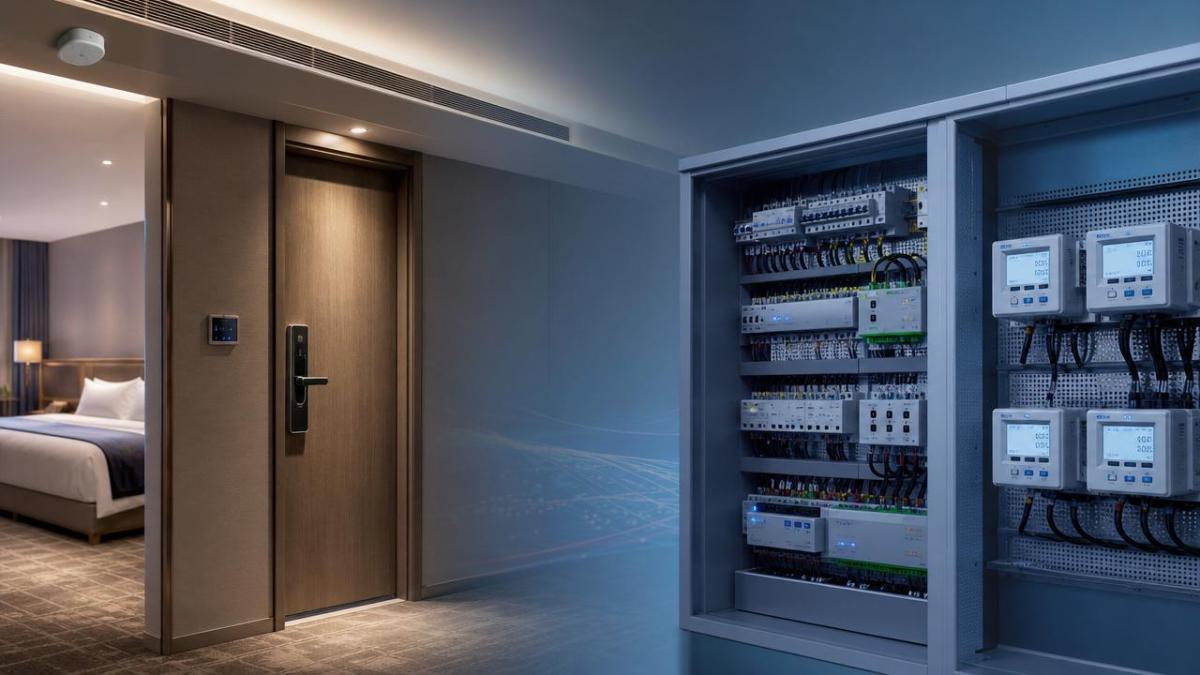
Smart hotel automation is not only a technology upgrade. It is a capital allocation decision that must prove measurable payback.
This guide examines energy consumption, labor efficiency, guest experience, asset utilization, and long-term operational risk.
By translating systems into ROI, payback period, and procurement-ready benchmarks, smart hotel automation becomes easier to justify across hotel assets.
Why Smart Hotel Automation Needs a Checklist Approach
Hotel automation projects often fail financially because benefits are described broadly, while costs are approved precisely.
A checklist forces each automation function to connect with a measurable operating line, such as electricity, housekeeping hours, or maintenance response time.
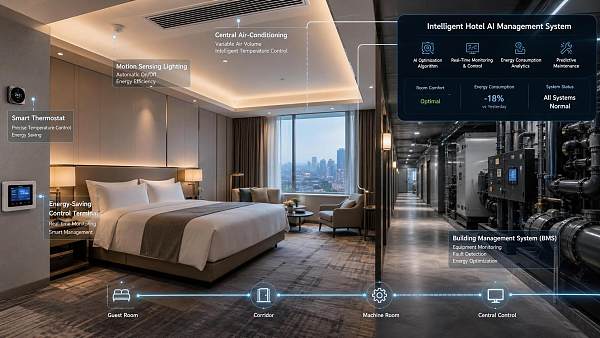
Smart hotel automation also crosses multiple systems. HVAC, lighting, access control, PMS, BMS, sensors, and analytics must work together.
Without structured validation, one weak interface can reduce savings, delay commissioning, or create unexpected lifecycle costs.
A checklist supports vendor comparison, budget discipline, phased deployment, and post-installation verification.
Core Payback Checklist for Smart Hotel Automation
Use the following checklist before approving a smart hotel automation investment, expanding a pilot, or comparing competing proposals.
- Define the automation scope by system, floor, room type, and public area, then separate essential controls from optional guest-experience features.
- Establish the baseline for energy, labor, maintenance tickets, guest complaints, and room downtime before estimating any savings.
- Calculate HVAC savings using occupancy patterns, local tariffs, weather conditions, setback rules, and existing equipment efficiency.
- Measure lighting payback by combining LED status, daylight harvesting, motion sensing, corridor scheduling, and scene-control requirements.
- Quantify labor impact through mobile task dispatch, automated room status, predictive maintenance alerts, and reduced manual inspection rounds.
- Check integration depth with PMS, BMS, door locks, elevators, payment systems, and guest applications before accepting payback claims.
- Include installation disruption, wiring constraints, gateway placement, network upgrades, and temporary room unavailability in the project cost.
- Validate cybersecurity controls, data retention rules, access permissions, device authentication, and remote support procedures.
- Compare lifecycle costs, including licenses, cloud fees, sensor replacement, firmware updates, training, warranties, and service-level agreements.
- Set verification metrics for the first 90, 180, and 365 days so smart hotel automation savings can be audited.
Cost Categories That Shape Payback
The purchase price is only one part of smart hotel automation cost. A realistic model should separate capital and operating expenses.
A good proposal should state assumptions clearly. If the vendor cannot explain savings logic, the payback model is not reliable.
Energy Savings: The Most Visible ROI Driver
Energy is usually the strongest financial case for smart hotel automation, especially in properties with high HVAC loads.
Room occupancy controls can reduce heating or cooling when rooms are vacant, checked out, or in housekeeping status.
Common areas add another layer. Lobbies, corridors, meeting rooms, kitchens, and back-of-house zones often have mismatched schedules.
Smart hotel automation should connect occupancy data with HVAC setpoints, lighting scenes, ventilation rules, and demand-response opportunities.
For financial modeling, avoid generic savings percentages. Use meter history, utility rates, seasonal variation, and occupancy forecasts.
Energy Checklist
- Review twelve months of energy data and isolate unusual periods caused by renovation, shutdowns, extreme weather, or partial occupancy.
- Model room-level savings separately from public-area savings because schedules, comfort expectations, and control logic differ.
- Confirm whether automation will control equipment directly or only recommend actions through dashboards.
- Track savings after commissioning with submetering, BMS reports, and monthly variance analysis.
Labor Efficiency and Service Flow
Smart hotel automation can reduce manual coordination, but it rarely removes labor instantly.
The financial value comes from better task sequencing, faster room readiness, fewer repeated visits, and improved maintenance prioritization.
Housekeeping automation can update room status automatically when occupancy sensors, door events, and PMS data align.
Maintenance automation can prioritize faults by asset criticality, guest impact, and predicted failure probability.
These gains should be measured in hours saved, rooms released earlier, complaints avoided, and emergency repair costs reduced.
Labor Checklist
- Map today’s workflows before automation, including handoffs between front office, housekeeping, engineering, and management systems.
- Identify tasks that automation can eliminate, shorten, or reschedule without harming guest service quality.
- Measure cycle time for room turnaround, maintenance response, issue closure, and supervisor inspection.
- Train teams on exception handling, because automation creates value only when alerts trigger disciplined action.
Guest Experience and Revenue Protection
Not every smart hotel automation benefit appears as a direct cost saving.
Some benefits protect revenue by reducing comfort complaints, room moves, compensation requests, and negative reviews.
Automated temperature preferences, contactless access, digital service requests, and room personalization can improve perceived quality.
However, guest-facing automation must be simple. Complicated controls create frustration and increase staff intervention.
A payback model should assign conservative value to guest experience unless evidence links the feature to higher revenue or lower complaint costs.
Scenario Guidance for Different Hotel Assets
Full-Service Urban Hotels
Full-service properties often gain from integrated energy management, event-space scheduling, predictive maintenance, and centralized building analytics.
Smart hotel automation payback improves when banquet rooms, meeting areas, kitchens, and guest rooms share reliable occupancy data.
Resorts and Destination Properties
Resorts usually have larger footprints, longer guest dwell time, and higher comfort expectations.
Automation value may come from energy zoning, asset tracking, water management, transport coordination, and predictive maintenance for distributed equipment.
Limited-Service Hotels
Limited-service assets need simpler automation packages with fast installation and low support overhead.
The best smart hotel automation case may focus on thermostats, lighting controls, access management, and automated issue reporting.
Retrofit Projects
Retrofits require deeper site investigation than new builds. Existing cabling, ceiling access, network stability, and device compatibility matter.
Wireless systems can reduce disruption, but battery replacement, signal reliability, and cybersecurity must be included in lifecycle planning.
Commonly Ignored Risks
Overstated savings: Smart hotel automation vendors may present broad industry averages that ignore climate, occupancy, tariffs, and building condition.
Weak integration: If PMS, BMS, locks, and room controls do not exchange data reliably, savings will remain theoretical.
Hidden recurring costs: Cloud subscriptions, API fees, analytics modules, replacement sensors, and premium support can extend payback significantly.
Poor commissioning: Incorrect setpoints, untested alarms, duplicate controls, and unfinished training can destroy expected automation value.
Cybersecurity exposure: Connected hotel systems require device authentication, network segmentation, patch control, and access logging.
Guest resistance: Automation that removes familiar controls or requires unnecessary app downloads can reduce satisfaction.
Practical Execution Plan
Start with a limited pilot that includes representative room types, one public area, and one operational workflow.
Define acceptance criteria before installation. Include energy variance, response time, guest feedback, staff adoption, and system uptime.
Require vendors to provide an integration matrix. It should list systems, protocols, data fields, ownership, and failure-response procedures.
Build the payback model with conservative, base, and upside cases. The conservative case should still support approval.
After commissioning, review actual performance monthly. Adjust schedules, setpoints, alerts, and training materials as operating data improves.
Implementation Checklist
- Select pilot zones where baseline data is strong, operational pain is visible, and installation disruption is manageable.
- Document all assumptions in the investment case, including tariffs, occupancy, labor rates, and maintenance cost history.
- Negotiate service levels for uptime, response time, software updates, cybersecurity patches, and spare-part availability.
- Create a benefits tracker that compares projected savings with actual operating data after launch.
- Expand only after the pilot proves savings, staff usability, guest acceptance, and integration stability.
Payback Formula and Decision Thresholds
A simple payback formula is total project cost divided by annual net benefit.
Annual net benefit should include verified energy savings, labor efficiency, avoided maintenance cost, and revenue protection.
It should subtract software subscriptions, service contracts, training, replacement parts, and internal administration.
For many hotel assets, a shorter payback may be expected for energy controls than for premium guest-experience functions.
Smart hotel automation should be compared with other capital projects, not judged only as an IT initiative.
Summary and Next Action
Smart hotel automation delivers value when technical functions are tied to measurable operating outcomes.
The strongest business cases combine energy reduction, workflow efficiency, asset protection, and improved service consistency.
Before approval, build a checklist-based model that separates assumptions, verifies integration, and includes lifecycle costs.
The next step is to audit baseline performance, define pilot zones, request comparable vendor data, and set post-launch verification metrics.
With disciplined measurement, smart hotel automation can move from a promising concept to a predictable payback investment.
Recommended News
 Oct 18, 2026How to reduce nuisance alarms in water treatment SCADA systemsOptimize SCADA systems for water treatment. Discover proven ways to reduce nuisance alarms, tune alarm logic, and improve operator focus without compromising treatment safeguards.
 Oct 15, 2026Can digital manufacturing solutions work with legacy factory PLCs?Explore digital manufacturing solutions for factories that work with legacy PLCs. Learn how to assess connectivity, data quality, and security before investing in integration.
 Oct 14, 2026Why Does SCADA Data Differ from Field Device Readings?Why does SCADA data fail to match field device readings? Discover common scaling, timing, and communication errors, plus practical checks to pinpoint mismatches and avoid unnecessary calibration.
 Oct 03, 2026How IoT integration for smart agriculture reduces irrigation wasteIoT integration for smart agriculture cuts irrigation waste with soil, weather, flow, and pressure data—helping farms automate smarter watering and detect leaks early.
 Sep 24, 2026How Zigbee mesh latency affects smart hotel guest room controlsSmart hotel Zigbee mesh latency can shape guest comfort and system reliability. Learn how to design, test, and optimize responsive hotel room controls.
![]() Oct 15, 2026How Much Does Industrial Automation Software Implementation Cost?How much does industrial automation software implementation cost? Explore project pricing, key cost drivers, hidden expenses, and smart budgeting strategies.
Oct 15, 2026How Much Does Industrial Automation Software Implementation Cost?How much does industrial automation software implementation cost? Explore project pricing, key cost drivers, hidden expenses, and smart budgeting strategies. Sep 11, 2026How edge processing latency affects real-time SCADA alarmsEdge processing latency can make or break real-time SCADA alarms. Learn how to benchmark delay, improve alarm integrity, and build resilient response paths.
 Sep 09, 2026How energy management analytics uncovers avoidable peak-demand costsEnergy management analytics reveals avoidable peak-demand costs, identifies controllable load spikes, and helps finance teams cut utility charges with confidence.
 Aug 31, 2026How SCADA data polling frequency affects alarm response timeSCADA data polling frequency directly shapes alarm response time. Learn how scan rates, latency, delays, and network behavior affect reliable detection.
 Aug 29, 2026When open source industrial OPC UA is the right fit for SCADA integrationOpen source industrial OPC UA for SCADA integration: explore interoperability, security, lifecycle ownership, and evaluation steps for scalable multi-vendor operations.
 Aug 12, 2026How to Scope an Industrial Cybersecurity Risk Assessment for SCADA and IIoT SystemsIndustrial cybersecurity risk assessment for SCADA and IIoT starts with the right scope. Learn how to define boundaries, map consequences, and uncover hidden attack paths.
 Aug 06, 2026How to Evaluate Data Historian Software for Automation Integration and ScalingData historian software for automation: learn how to evaluate integration, scalability, data integrity, and security to choose a platform that supports growth and smarter decisions.
 Jul 31, 2026How Smart Hotel AI Helps Reduce Energy Costs Without Hurting Guest ExperienceSmart hotel AI helps hotels cut energy costs by controlling HVAC, lighting, and occupancy-based settings—without hurting guest comfort. Learn what to check before you buy.
 Jul 30, 2026How Industrial Digitization for Electronics Cuts Downtime in High-Mix ProductionIndustrial Digitization for electronics helps high-mix manufacturers cut downtime by improving changeovers, traceability, maintenance response, and line decisions. Learn where digital tools deliver the fastest ROI.
 Jul 22, 2026Supply Chain Resilience Risk Management: Key Metrics and Response PlansSupply Chain Resilience risk management explained with key metrics, scenario-based thresholds, and response plans to reduce disruption, qualification delays, and hidden supply risk.
 Jul 15, 2026Energy Software for Manufacturing Plants: Cost Savings vs Integration RiskEnergy software for manufacturing plants can cut utility waste, but only if savings outweigh integration risk. Learn how to evaluate ROI, data quality, cybersecurity, and rollout fit.
 Jul 14, 2026Fintech in 2026: Which Operating Trends Matter Most for Growth PlanningFintech in 2026 is shifting from rapid expansion to governed scale. Explore the key trends shaping growth planning, from embedded finance and AI risk controls to resilience and compliance.
 Jul 13, 2026When Data Historian Software for Manufacturing Delivers ROIData historian software for manufacturing delivers ROI by reducing downtime, improving quality, and speeding compliance. See how to evaluate value before you buy.
 Jul 13, 20265G IIoT Gateway Wholesale: Key Specs That Affect Deployment Cost5g iiot gateway wholesale decisions should go beyond unit price. Learn which specs cut deployment cost, reduce integration risk, and improve long-term industrial ROI.
 Jul 11, 2026SCADA Systems in the Middle East: Key Compliance and Integration ChecksSCADA Systems Middle East projects need more than features. Discover key compliance, cybersecurity, and integration checks to reduce risk, protect uptime, and choose the right platform.
 Jul 09, 2026Industrial Technology Platform Pricing: What Drives Total Cost Beyond the LicenseIndustrial technology platform pricing goes far beyond the license. Learn the hidden cost drivers—integration, compliance, scalability, and support—to make smarter buying decisions.
 Jul 09, 2026Industrial Standards Compliance for Electronics: Key Gaps That Delay Market AccessIndustrial standards compliance for electronics often stalls market access due to hidden gaps in testing, traceability, supplier records, and regional rules. Learn how to spot risks early and accelerate certification.
 Jul 08, 2026IT Infrastructure Gaps That Slow Industrial GrowthIT infrastructure gaps can quietly slow industrial growth, raise risk, and weaken supply chains. Learn which issues matter most and how to fix them for faster, smarter scaling.
 Jul 06, 2026Open Source Industrial SCADA: Key Risks, Benefits, and FitOpen source industrial SCADA: explore key benefits, cybersecurity risks, costs, and best-fit use cases to see if it can support reliable, scalable industrial operations.