Search News
Industry Portal
Popular Tags
SEMI Standards for Automation Compliance Basics

Author
Time
Click Count
SEMI Standards for industrial automation sit at the point where equipment performance, factory interoperability, and operational discipline meet. For semiconductor lines, advanced materials plants, and digitally connected manufacturing sites, compliance is rarely a formal checkbox. It is the practical language used to decide whether tools can communicate cleanly, move safely through integration, and keep process control stable under real production pressure. That is why SEMI Standards for Automation Compliance Basics matter far beyond the semiconductor floor.
Why automation compliance has become a board-level technical issue

In today’s industrial landscape, manufacturing systems are expected to do more than run fast. They must exchange data reliably, support traceability, and remain predictable across long equipment lifecycles. SEMI Standards for industrial automation help define that baseline. They clarify how automation layers should behave when tools, controllers, software, and factory networks need to work together.
This has become especially relevant as semiconductor sovereignty, supply-chain resilience, and smart manufacturing investment accelerate. A platform may look capable on paper, yet still create integration delays if interfaces, message structures, or control expectations do not align. Technical evaluators increasingly treat SEMI compliance as a signal of maturity, not just compatibility.
G-CST’s benchmarking approach fits this reality well. By comparing high-precision equipment, industrial software, motion systems, and advanced materials against international standards, it helps translate abstract compliance claims into measurable engineering confidence. That is where SEMI Standards for Automation Compliance Basics become useful in practice: they give reviewers a way to separate marketing language from operational readiness.
What SEMI automation standards are really checking
At a basic level, SEMI Standards for industrial automation address how factory equipment should communicate, report status, and respond to commands. They are not limited to one machine type. Instead, they cover the interface logic that allows tools to sit inside broader production ecosystems without forcing custom workarounds at every connection point.
The most valuable part of this framework is consistency. When message formats, equipment states, alarm handling, and data exchange rules are standardized, integration becomes easier to validate. That means less time is spent resolving mismatched signals, undocumented exceptions, or late-stage software patching.
For technical evaluators, the key question is not whether a vendor uses SEMI terminology. It is whether the implementation supports stable automation behavior in a real plant environment. A compliant design should make traceability clearer, reduce ambiguity during startup, and preserve control integrity when the system scales.
Core compliance areas to watch
- Interface compatibility across host, equipment, and factory systems
- Consistent status reporting and event handling
- Clear alarm logic and recoverable fault behavior
- Traceable data exchange for quality and audit needs
- Repeatable behavior during startup, shutdown, and changeover
Where the standards matter most in industrial settings
SEMI Standards for industrial automation are most visible in semiconductor fabrication, but their logic extends to adjacent sectors that depend on precision control. Vacuum systems, chemical delivery units, motion platforms, and digital twin-enabled process environments all benefit from structured automation rules. The common challenge is the same: too many moving parts, too little tolerance for ambiguity.
In semiconductor equipment, compliance helps ensure that tool-to-host communication works across multi-vendor environments. In pump and valve systems, it supports stable sequencing and error handling. In precision motion control, it improves synchronization and diagnostic clarity. In industrial software, it strengthens the connection between real-time machine signals and supervisory decision layers.
How to read a compliance claim in practice
A useful review of SEMI Standards for industrial automation starts with behavior, not brochures. The question is whether the equipment can demonstrate the expected message flow, state transition logic, and exception handling under realistic conditions. A test environment should include normal operation, alarm events, recovery paths, and integration with surrounding software.
It also helps to look beyond the base equipment specification. Some systems claim support for standards but only expose partial functions, custom mappings, or limited diagnostics. That may be acceptable for isolated use, yet it becomes a burden in multi-site or multi-vendor deployment. SEMI compliance becomes most valuable when it reduces hidden engineering effort.
For evaluation teams, a practical checklist usually includes documentation depth, interface test evidence, software version control, and lifecycle support. These details matter because automation compliance is not fixed at shipment. It must remain stable through upgrades, maintenance, and line expansion.
Signals that deserve closer review
- Partial support without clear test evidence
- Heavy reliance on custom middleware
- Incomplete alarm or recovery mapping
- Weak documentation for long-term maintenance
- Unclear alignment between software and equipment versions
What G-CST-style benchmarking adds to the decision process
In complex industrial procurement, standards are most useful when they are translated into comparable data. That is one reason G-CST’s intelligence model is relevant. It connects technical benchmarking with market and supply-chain context, so compliance is not judged in isolation. A system may meet a standard, yet still face material, software, or export-control constraints that affect deployment.
This broader view is valuable across the five pillars G-CST tracks: semiconductor fabrication equipment, specialized pumps and valves, precision motion control, industrial software and digital twins, and advanced engineering materials. SEMI Standards for industrial automation influence all of them in different ways, because each depends on reliable integration, traceable behavior, and disciplined interfaces.
When compliance data is combined with project tender updates, export-control awareness, and supply-chain analysis, the result is a more realistic view of project risk. That is especially important when production schedules are tight and retrofitting is expensive.
A practical way forward
The best way to approach SEMI Standards for industrial automation is to treat them as an operating filter. They help identify which tools are ready for structured integration, which ones need additional validation, and which ones may create hidden lifecycle costs. For high-stakes manufacturing, that clarity is often worth more than a simple compliance label.
A sound next step is to compare standard support against actual process needs, then verify the gap with integration testing and lifecycle documentation. If the goal is a resilient automation stack, the standard should support decisions about interoperability, safety, maintainability, and long-term scalability.
Seen this way, SEMI Standards for Automation Compliance Basics are not just a technical reference. They are a practical framework for reducing uncertainty, improving alignment across systems, and making sure industrial automation performs the way production plans assume it will.
Recommended News
 Oct 02, 2026What to verify before choosing a CMP equipment supplierCMP equipment supplier selection made clearer: verify process performance, consumables compatibility, automation, service support, and acceptance criteria before investing.
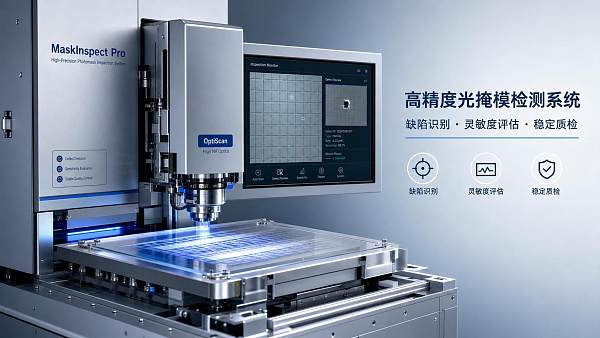
 Jul 17, 2026How to Evaluate a Mask Inspection System for Photomask Defect RiskMask inspection system for photomask evaluation starts with defect risk. Learn how to compare sensitivity, false calls, throughput, and supplier reliability for smarter selection.
 Jul 14, 2026SEMI Standards for Cleanrooms: Key Compliance Points for New Fab ProjectsSEMI standards for cleanrooms: learn the key compliance points new fab teams must address early to cut redesign, control startup risk, and speed qualification with confidence.
 Jul 13, 2026How to Evaluate a Photoresist Coater Exporter for Stable YieldPhotoresist coater exporter selection affects yield, uptime, and risk. Learn how to assess process capability, export reliability, and service support before you buy.
 Jul 11, 2026How to Compare UV Exposure Accuracy in Mask Aligner SystemsMask aligner UV exposure system comparison starts with real accuracy. Learn how to evaluate dose uniformity, spectral stability, and alignment repeatability for better process yield.
 Jun 28, 2026High NA EUV Overlay Accuracy: Key Limits for Process ControlHigh NA EUV overlay accuracy defines yield, tool matching, and process stability at advanced nodes. Discover the key limits, metrology risks, and control priorities shaping fab performance.
 Jun 26, 2026SEMI Standards for Automation Compliance BasicsSEMI Standards for industrial automation guide compliance, interoperability, and stable production. Discover the basics that reduce risk, improve integration, and support smarter manufacturing.
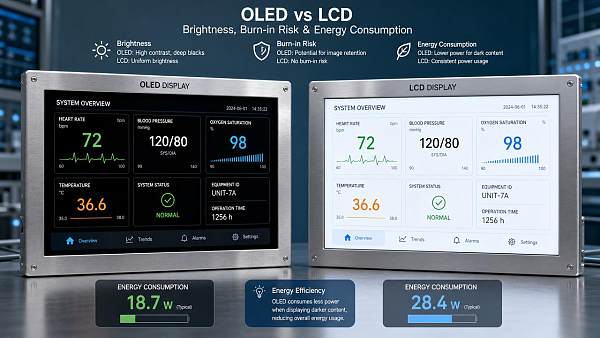
 Jun 13, 2026OLED Displays vs LCD: What Matters for Brightness, Burn-In, and PowerOLED displays vs LCD: compare sustained brightness, burn-in risk, and power behavior to choose the right display for industrial, commercial, and high-uptime systems.
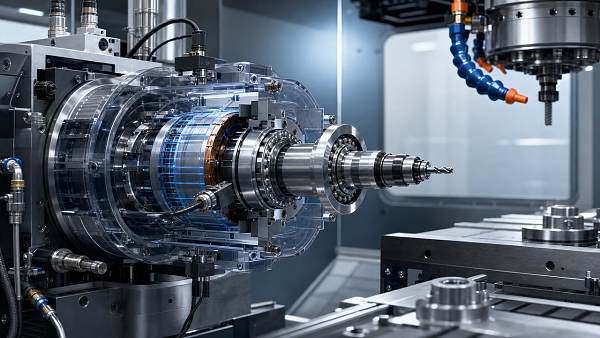
 May 22, 2026Future of High-Speed Spindles: 2026 Performance Trade-OffsFuture of high-speed spindles in 2026: discover the real trade-offs between RPM, thermal stability, bearing life, energy use, and supplier support to make smarter buying decisions.
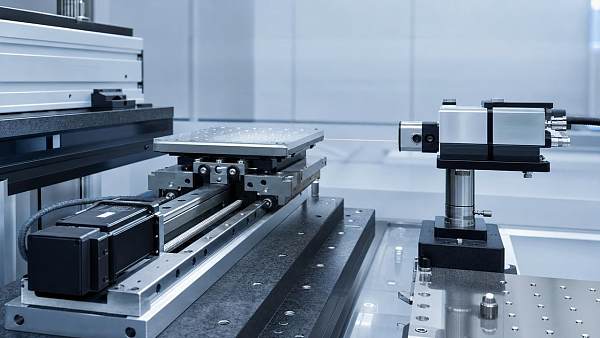
 May 22, 2026Precision Stage Repeatability Data: What Drift Is Acceptable?Precision stage repeatability data explained: learn what drift is acceptable, how to judge risk, and how to validate motion performance before it impacts yield, compliance, or long-term reliability.
 May 21, 2026Spindle Run-Out Benchmarks That Matter in 2026Spindle run-out benchmarks that matter in 2026: learn the reference ranges, test criteria, and qualification checks that reduce risk, improve precision, and support smarter sourcing decisions.
 May 19, 2026Vibration Isolator Supplier Guide for Sensitive EquipmentVibration isolator supplier guide for sensitive equipment: learn how to compare performance data, materials, compliance, and lifecycle value to choose a reliable partner with confidence.
 May 18, 2026Cross Roller Bearing Factory Selection for Compact High-Precision StagesCross roller bearing factory selection guide for compact high-precision stages. Learn how to verify quality, preload control, compliance, and sourcing risk for reliable performance.
 May 09, 2026Global Metrology Tools Growth Data and Its Impact on Yield PlanningGlobal metrology tools growth data reveals how rising inspection demand shapes yield planning, process control, and equipment strategy—helping technical teams reduce risk and improve ROI.
 May 08, 2026The Future of High-NA EUV Technology and the Subsystems Most Likely to BottleneckFuture of High-NA EUV technology: discover which subsystems may become the biggest bottlenecks—from motion stages and metrology to vacuum control—and why they matter for yield, uptime, and smarter benchmarking.
![]() May 07, 2026Lithography Light Source Wavelength Data: How to Judge Tool Fit and Process WindowLithography light source wavelength data reveals how to judge tool fit, process window, yield risk, and upgrade paths—helping enterprise buyers compare platforms with confidence.
May 07, 2026Lithography Light Source Wavelength Data: How to Judge Tool Fit and Process WindowLithography light source wavelength data reveals how to judge tool fit, process window, yield risk, and upgrade paths—helping enterprise buyers compare platforms with confidence. May 06, 2026Die Bonder Factory Shortlist: What to Compare Beyond Unit PriceDie bonder factory selection should go beyond unit price. Compare yield stability, maintenance, compliance risk, and service support to reduce downtime and improve long-term ROI.
 May 06, 2026How to Compare a Wire Bonder Supplier Without Missing Hidden Service RisksWire bonder supplier comparison goes beyond price. Discover how to spot hidden service risks, protect uptime, and choose a partner with reliable long-term support.
 May 05, 2026Spin Coater Manufacturer Selection Mistakes That Hurt Coating UniformitySpin coater manufacturer selection mistakes can ruin coating uniformity. Learn what to check for better stability, fewer defects, and more reliable thin-film results.
 May 05, 2026Wafer Carrier Box Factory Checklist: Material, Cleanliness, and Lead TimeWafer carrier box factory checklist for buyers: compare material performance, cleanliness control, and lead time stability to reduce contamination risk and secure reliable supply.
 May 04, 2026Photoresist Coater Factory Audit Checklist for Consistent Coating QualityPhotoresist coater factory audit checklist for quality and safety teams: uncover contamination, calibration, EHS, and QC risks to improve coating consistency and supplier confidence.
 May 04, 2026What Sets a Reliable Lithography Light Source Supplier Apart in 2026Lithography light source supplier selection in 2026 demands more than price. Discover how reliability, compliance, service depth, and supply resilience protect yield, uptime, and ROI.
 May 02, 2026SEMI Standards for Semiconductor Equipment: Key Checks Before QualificationSEMI Standards for semiconductor equipment: learn the key pre-qualification checks for safety, automation, contamination control, reliability, and documentation before fab approval.
![]() Apr 21, 2026Where EUV Lithography Systems Lose Uptime FirstEUV Lithography Systems lose uptime first in precision motion control, high-performance bearings, and Industrial Software Solutions—learn benchmarking, maintainability, and compliance insights.
Apr 21, 2026Where EUV Lithography Systems Lose Uptime FirstEUV Lithography Systems lose uptime first in precision motion control, high-performance bearings, and Industrial Software Solutions—learn benchmarking, maintainability, and compliance insights.