Search News
Industry Portal
Popular Tags
How to Compare Data Historian Software for Factory Uptime
Author
Time
Click Count
Choosing the right data historian software factory teams can trust is critical when uptime, traceability, and compliance directly affect production risk. For technical evaluators, comparing platforms means looking beyond dashboards to data integrity, scalability, integration with SCADA or MES, and long-term lifecycle value. This guide outlines how to assess historian solutions with the rigor needed for high-reliability industrial environments.
In semiconductor-linked manufacturing, precision materials processing, pump and valve systems, motion control lines, and digital twin environments, historian selection often influences far more than reporting. It affects root-cause analysis, batch genealogy, alarm reconstruction, maintenance timing, and the ability to defend decisions during audits or customer qualification reviews.
For technical evaluation teams, the central question is not which interface looks modern. The real question is which data historian software factory operations can depend on for 24/7 capture, 1-second to sub-second resolution where needed, reliable long-term storage, and low-friction interoperability across OT and IT layers.
Why historian comparison matters for factory uptime
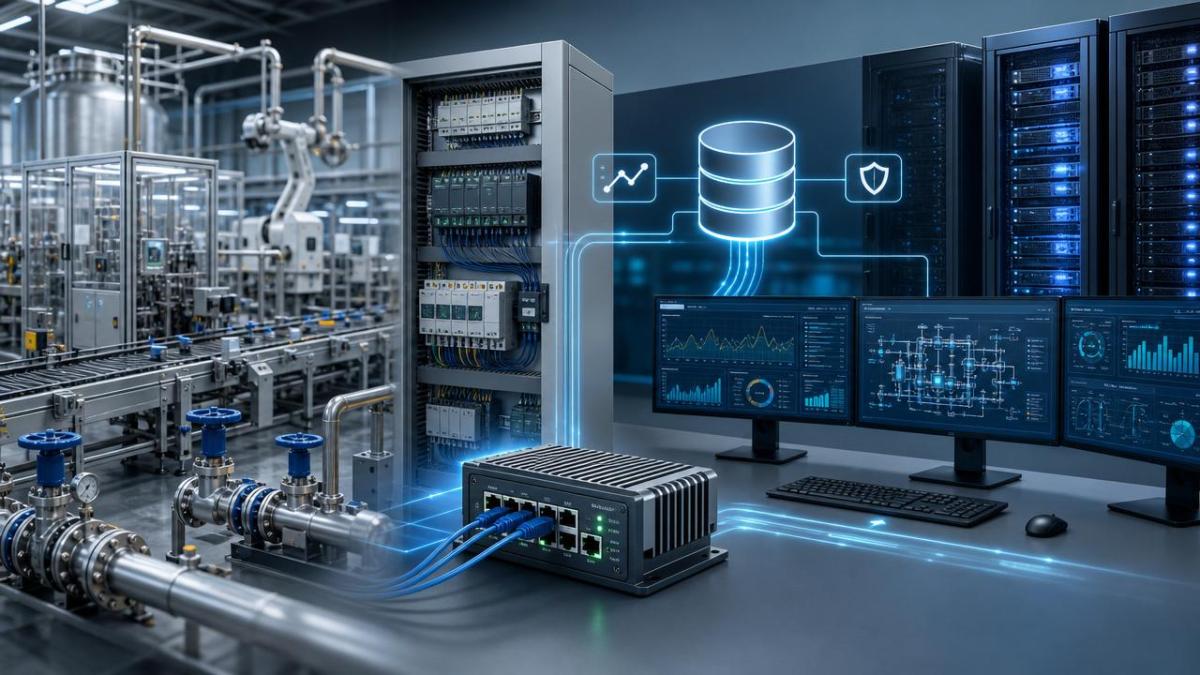
A historian platform becomes part of the plant’s operational memory. When downtime events last 15 minutes or 3 hours, engineers need sequence-of-events visibility, tag quality context, and time alignment across PLCs, SCADA, MES, and asset systems. Missing or delayed records can turn a straightforward fault into days of inconclusive troubleshooting.
In high-value production environments, even a 1% improvement in uptime can matter. A packaging line, a thermal process unit, or a precision coating cell may generate thousands of data points per second. If the historian cannot compress, retrieve, and contextualize that information accurately, operations lose the basis for predictive decisions.
Where factory teams feel the impact first
- Unplanned downtime analysis after equipment trips, recipe deviations, or utility interruptions
- Batch traceability for regulated or quality-sensitive production with retention periods of 3–10 years
- OEE improvement programs that depend on high-frequency machine-state history
- Cross-site benchmarking when 2, 5, or 20 plants must use common data definitions
- Maintenance workflows that link runtime, vibration, temperature, and alarm history
Typical risks when the platform is underspecified
An undersized or poorly integrated historian can create data gaps during network interruptions, inconsistent timestamping between systems, and slow query performance once storage reaches multi-year scale. Many plants discover these weaknesses only after 6–18 months, when tag counts expand and ad hoc analytics become routine.
For procurement and evaluation teams, this is why comparing only license cost is insufficient. Deployment architecture, failover design, connector availability, archive strategy, and retrieval speed under load often determine lifecycle cost more than the initial purchase order.
Core criteria to compare data historian software factory environments need
The most effective evaluation frameworks score each candidate across at least 6 dimensions: data capture reliability, model scalability, integration depth, query performance, governance features, and supportability. Weightings vary by plant, but uptime-critical sites usually assign 25%–35% of total score to reliability and recovery behavior alone.
1. Data integrity and timestamp fidelity
Start with the basics: how the historian handles timestamp source, buffering, late-arriving data, duplicate suppression, interpolation, and bad-quality flags. In a factory setting, a 2-second drift between process values and alarm events may distort root-cause analysis, especially in fast motion, pressure, or temperature excursions.
Ask whether the platform supports store-and-forward at edge nodes, checksum or validation mechanisms, and recovery after a 5-minute or 2-hour network loss. Technical evaluators should test not just nominal operation, but degraded conditions and restart scenarios.
Integrity checks worth including
- Compare source PLC timestamps against historian records over a 24-hour period.
- Simulate communication interruption and measure replay completeness.
- Review how quality states are exposed to dashboards, reports, and APIs.
- Verify whether daylight saving shifts or time zone changes affect archives.
2. Scalability beyond the pilot phase
Many projects begin with 5,000–20,000 tags and expand to 100,000 or more once utilities, packaging, environmental systems, and maintenance signals are added. The right data historian software factory operators select should scale in tag count, users, sites, and retention duration without forcing disruptive redesign.
Review archive expansion methods, cloud or hybrid deployment options, and the practical impact of compression settings on retrieval. Some architectures remain responsive for 12 months but degrade sharply after 36 months of retained high-frequency signals if indexing and partitioning are weak.
3. Integration with SCADA, MES, ERP, and analytics
Integration depth should be assessed connector by connector. Support for OPC UA, MQTT, Modbus gateways, SQL interfaces, REST APIs, and common MES or CMMS pathways can save months of custom work. In modern plants, historian data often feeds digital twins, energy management, SPC, and condition monitoring.
If the platform requires heavy scripting for common interfaces, lifecycle burden rises. Technical evaluators should ask how many native connectors exist, how version changes are handled, and whether metadata can flow bi-directionally between historian and higher-level applications.
The table below provides a practical scoring model for comparing historian candidates in uptime-focused manufacturing programs.
This comparison framework helps evaluation teams keep attention on operational consequences instead of feature lists. A platform with strong visualization but weak buffering, weak naming governance, or fragile interfaces may score well in demos and still underperform once the plant reaches steady-state scale.
Architecture, security, and lifecycle factors that influence total value
For many buyers, the most expensive failures occur after implementation. A historian that is hard to patch, difficult to back up, or dependent on a narrow expert pool increases operational risk over 5–10 years. Technical evaluators should treat maintainability and cyber readiness as first-order criteria, not secondary items.
Deployment model and resilience design
Compare on-premises, hybrid, and cloud-enabled options based on latency, regulatory needs, and plant network design. A packaging facility may tolerate minute-level synchronization to enterprise systems, while a semiconductor support utility or continuous process line may require local capture at sub-second cadence with near-immediate recovery.
Ask how redundancy is implemented. Is failover active-passive or active-active? How long does switchover take: 10 seconds, 60 seconds, or several minutes? What is the backup cadence for configuration and archives, and how long does restore testing take in practice?
Security and access governance
Historian data often includes process recipes, asset performance signatures, environmental records, and utility consumption history. That makes role-based access control, audit logs, encryption options, and domain integration important. In larger industrial groups, separate access tiers may be needed for operations, engineering, quality, and external service providers.
Also review how the system handles patching windows and version compatibility. Plants with quarterly change control cycles need predictable upgrade paths. If every upgrade creates connector regression risk, the platform becomes harder to sustain across multiple sites.
Data model governance
A historian is only as useful as its naming, asset hierarchy, and contextual structure. Without governance, one site stores “Line1_Temp” while another stores “L1_RT_Temperature,” making enterprise comparison difficult. Standardized tag dictionaries, equipment hierarchies, and engineering units reduce rework and improve analytics portability.
The next table highlights lifecycle considerations that frequently separate short-term wins from sustainable historian programs.
These lifecycle items are especially relevant for B2B buyers managing critical production assets under strict reliability expectations. In many cases, the best-fit historian is not the one with the longest feature sheet, but the one that can be governed, validated, and maintained predictably across changing production demands.
A practical evaluation process for technical teams
A structured comparison process reduces bias and helps stakeholders agree on tradeoffs early. For most factory programs, a 4-stage evaluation works better than a single demonstration: requirements definition, shortlist screening, proof of value, and implementation planning. This usually takes 4–8 weeks depending on plant complexity.
Stage 1: Define use cases before features
Begin with 8–12 priority use cases. Examples include downtime investigation within 10 minutes, batch genealogy retrieval in under 2 minutes, alarm sequence reconstruction, energy intensity reporting by shift, or vibration trend review for rotating assets. These use cases turn abstract claims into measurable tests.
Stage 2: Score the shortlist with weighted criteria
Use a weighted matrix with technical, operational, and commercial factors. A common structure is 30% reliability, 20% integration, 15% scalability, 15% usability, 10% security, and 10% vendor support. Plants with strict compliance needs may raise auditability and retention controls to 20% or more.
Stage 3: Run a proof of value in realistic conditions
A useful pilot should run with representative tag counts, not toy datasets. Include at least 3 data sources, such as PLC or DCS signals, SCADA context, and a higher-level system like MES or CMMS. Test event recovery, archive growth, and user queries over at least 7–14 days if the schedule allows.
This stage is where differences become visible. One platform may ingest smoothly but slow down on event-based queries. Another may query quickly but require manual mapping for every new asset. The right data historian software factory evaluation process exposes these tradeoffs before procurement is finalized.
Stage 4: Plan implementation and ownership
Implementation quality often determines realized value. Clarify who owns tag onboarding, naming standards, backup validation, interface testing, and user permissions. A 90-day roadmap with milestones for architecture approval, connector commissioning, historian validation, and dashboard handover is often more useful than a broad annual plan.
Common mistakes to avoid
- Buying for visualization features instead of reliable data capture
- Ignoring growth from 10,000 tags to 80,000+ tags over the next 24 months
- Underestimating metadata governance and naming consistency
- Skipping outage simulations, backup restore tests, and version compatibility checks
- Assuming one site’s architecture will automatically fit every plant
How G-CST-aligned buyers can sharpen procurement decisions
For organizations operating across advanced manufacturing, industrial software, and infrastructure-grade assets, historian selection should align with broader technical benchmarking practice. That means evaluating software not as a standalone dashboard layer, but as part of a reliability framework linked to standards, integration pathways, and supply-chain resilience.
A disciplined review should connect historian capability with plant-level risk exposure: how quickly a line can recover, how confidently a quality issue can be traced, and how efficiently data can support engineering decisions across multiple facilities. In sectors where regulatory changes, export controls, or customer qualification rules evolve, this traceability has direct commercial value.
When comparing options, technical evaluators should request architecture diagrams, interface lists, retention assumptions, failover logic, and support boundaries in writing. This creates a procurement record that is far stronger than relying on sales demonstrations alone, and it helps internal stakeholders compare total lifecycle value over 3, 5, or 7 years.
Questions procurement should ask before approval
- What is the tested recovery behavior during a 30-minute communication outage?
- How does performance change when retention expands from 12 months to 5 years?
- Which connectors are native, and which require custom engineering?
- What internal skills are needed to maintain the platform after go-live?
- How are audit logs, access rights, and data exports controlled?
Comparing historian platforms for uptime-critical operations requires more than product comparison sheets. It requires evidence on data fidelity, scalability, integration, resilience, governance, and maintainability. The best decision is usually the one that reduces diagnostic time, supports disciplined operations, and remains manageable as tag volumes, sites, and compliance demands grow.
If your team is assessing data historian software factory deployment options across advanced industrial environments, G-CST can help structure the evaluation with benchmark-driven criteria, risk-focused review points, and practical procurement guidance. Contact us to discuss your use case, request a tailored comparison framework, or explore broader industrial software and digital infrastructure solutions.
Recommended News
 Jun 25, 2026BMS Integration Issues: Common Faults and Faster FixesBMS integration issues can escalate fast. Discover common faults, root-cause checks, and faster fixes to reduce downtime, improve reliability, and keep building operations stable.
 Jun 24, 2026Electronic Components Shortage Risks and Sourcing Signals in 2026Electronic components risks in 2026 are reshaping sourcing strategy. Discover shortage signals, compliance pressures, and smart actions to protect supply and project delivery.
 Jun 23, 2026Port Logistics Trends in 2026: Costs, Delays, and Capacity SignalsPort logistics in 2026 is reshaping costs, delays, and capacity planning. Discover the signals that help businesses reduce risk, protect margins, and make smarter supply-chain decisions.
 Jun 22, 2026Smart Street Lighting Energy-Saving Solutions That Cut Power CostsSmart street lighting energy-saving solutions help cities, campuses, and industrial sites cut power costs, improve control, and boost reliability with smarter, site-specific planning.
 Jun 21, 2026Sustainable Logistics Strategies That Cut Cost and EmissionsSustainable logistics strategies that cut cost and emissions: learn 5 practical ways to boost load efficiency, reduce freight waste, improve visibility, and strengthen project performance.
 Jun 19, 2026Mobile Accessories Trends in 2026: Which Categories Still Have MarginMobile accessories trends in 2026 reveal which categories still protect margin. Explore high-potential segments like GaN chargers, Qi2 gear, power banks, and premium protection.
 Jun 18, 2026Smart Home Devices Wholesale Bulk Order: Cost Traps to Check FirstSmart home devices wholesale bulk order buyers should check hidden costs before committing. Learn how compliance, firmware, compatibility, and logistics affect real margin.
 Jun 17, 2026Smart Hotel Installation Checklist for Stable System IntegrationSmart hotel installation checklist for stable integration: learn how to align rooms, public areas, networks, and protocols to reduce failures, improve uptime, and deliver a smoother guest experience.
 Jun 15, 2026Energy Auditing Checklist: Find Waste, Cut Costs, Improve UptimeEnergy auditing checklist to find hidden waste, cut energy costs, and improve uptime. Learn what to inspect first, prioritize quick wins, and turn audit findings into practical action.
 Jun 14, 2026Industrial Automation Software Solutions for Faster Line VisibilityIndustrial Automation Software solutions improve line visibility, reduce downtime, and strengthen traceability across assembly, process, and precision manufacturing. Learn how to choose the right fit.
 Jun 12, 2026Environmental Monitoring Systems: Key Features for ComplianceEnvironmentalmonitoringsystems are essential for compliance. Discover the must-have features for audit readiness, data integrity, alarms, and reliable facility control.
 Jun 12, 2026B2B Manufacturing Trends Shaping Supply Chains in 2026B2B manufacturing in 2026 is reshaping supply chains through resilience, traceability, compliance, and digital integration. Explore the trends driving smarter sourcing decisions.
 Jun 11, 2026Smart Manufacturing Trends 2026 for Industrial AutomationSmart manufacturing trends 2026 for industrial automation reveal how edge intelligence, verified interoperability, and compliance-ready systems can boost uptime, resilience, and smarter investment decisions.
![]() Jun 09, 2026Supply Chain Visibility: Key Metrics That Prevent DelaysSupply chain visibility starts with the right metrics. Discover 7 proven indicators that help prevent delays, reduce risk, and keep engineering projects on schedule.
Jun 09, 2026Supply Chain Visibility: Key Metrics That Prevent DelaysSupply chain visibility starts with the right metrics. Discover 7 proven indicators that help prevent delays, reduce risk, and keep engineering projects on schedule.![]() Jun 05, 2026Workplace Solutions That Cut Downtime in 2026Workplace solutions that cut downtime in 2026: explore predictive maintenance, resilient infrastructure, and smarter procurement strategies to boost uptime and reduce operational risk.
Jun 05, 2026Workplace Solutions That Cut Downtime in 2026Workplace solutions that cut downtime in 2026: explore predictive maintenance, resilient infrastructure, and smarter procurement strategies to boost uptime and reduce operational risk. Jun 02, 2026ESS Selection: Capacity, Safety, and ROIESS selection made clear: compare usable capacity, safety compliance, supplier reliability, and ROI factors to choose a resilient energy storage system with long-term value.
 Jun 02, 2026Photovoltaic Panels: 2026 Cost and Payback GuidePhotovoltaic panels in 2026: compare costs, incentives, ownership models, and payback scenarios to build a smarter, lower-risk solar investment plan.
 Jun 01, 2026Smart Hotel Supplier Checklist for Scalable Guest Room AutomationSmart hotel supplier checklist for choosing scalable guest room automation with reliable integration, cybersecurity, lifecycle support, and lower project risk.
 May 31, 2026Benchmarking for Smart Hotels: Metrics That MatterBenchmarking for smart hotels reveals the metrics that matter—energy, uptime, cybersecurity, guest adoption, and vendor resilience—to guide smarter investments and stronger performance.
 May 29, 2026Smart Hotel Automation Cost Payback GuideSmart hotel automation cost payback guide: evaluate ROI, energy savings, labor efficiency, integration risks, and lifecycle costs before investing.
 May 28, 2026Industrial Cloud Platform OEM vs Custom Build: Key Trade-OffsIndustrial cloud platform OEM vs custom build: compare speed, cost, compliance, lock-in, and control to choose the right industrial platform strategy for growth.
 May 27, 2026Industrial Edge Computing Platform: Latency vs Cost in 2026Industrial edge computing platform selection in 2026: compare latency, cost, security, and scalability with a practical checklist to reduce TCO and support real-time AI.
 May 27, 2026How to Compare Data Historian Software for Factory UptimeData historian software factory teams trust can improve uptime, traceability, and compliance. Learn how to compare reliability, scalability, and integration before you buy.
 May 26, 2026HMI Software OEM: Key Integration Checks Before LaunchHMI software OEM manufacturer launch guide: verify protocol integration, cybersecurity, performance under load, and lifecycle support before go-live to reduce risk and ensure reliable industrial deployment.