Search News
Industry Portal
Popular Tags
Industrial Edge Computing Platform: Latency vs Cost in 2026
Author
Time
Click Count
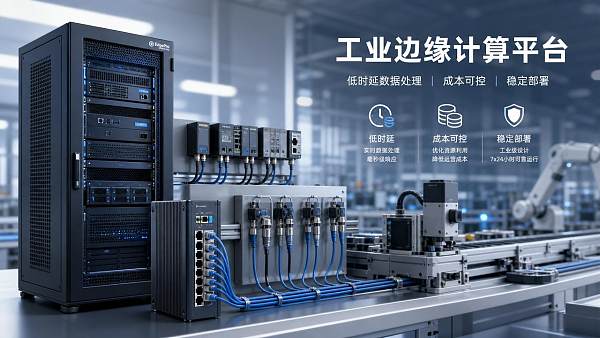
As industrial operations push toward real-time autonomy in 2026, choosing the right industrial edge computing platform is no longer just a technical upgrade—it is a board-level investment decision. For enterprise leaders, the real challenge lies in balancing ultra-low latency, deployment cost, cybersecurity, and long-term scalability across increasingly complex production and infrastructure environments.
Across process industries, utilities, logistics, semiconductor environments, and digital infrastructure, the wrong platform can lock in high integration cost, weak resilience, and poor lifecycle economics. The right one can reduce control-loop delay, stabilize data pipelines, and support future AI workloads without rebuilding the operational stack.
Why a Checklist Matters for Industrial Edge Computing Platform Selection
An industrial edge computing platform now sits between field devices, control systems, enterprise applications, and cloud analytics. That position makes it a technical dependency and a financial multiplier at the same time.
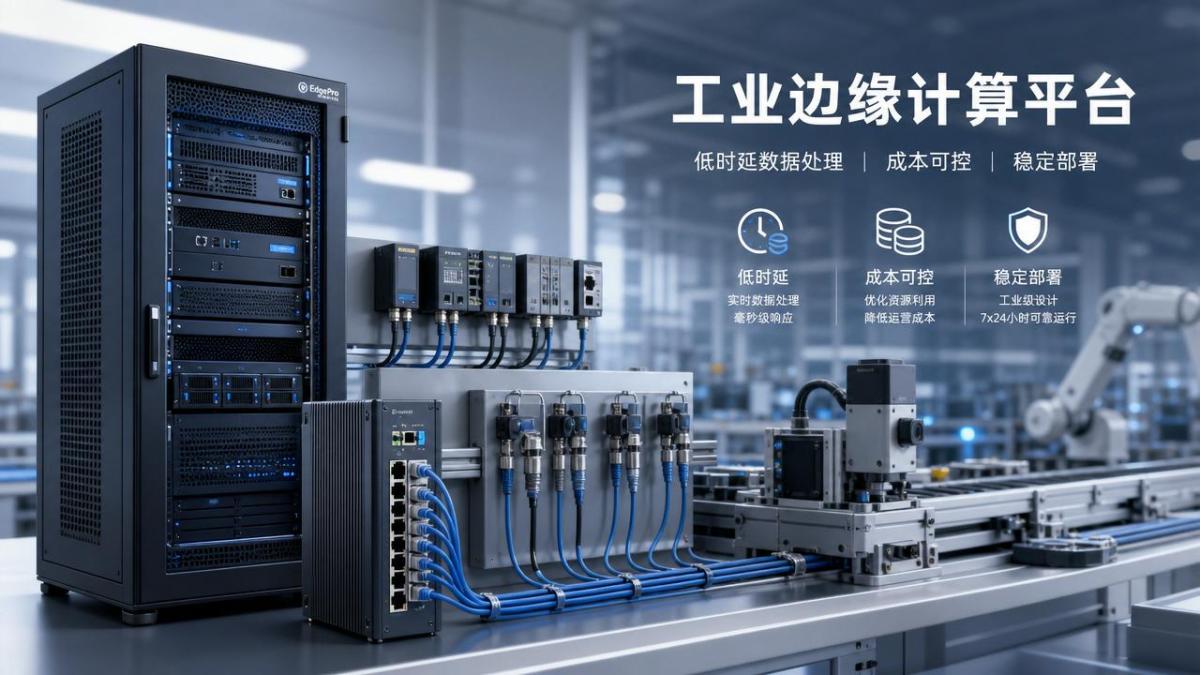
In 2026, latency targets are tightening because machine vision, predictive control, digital twins, and autonomous maintenance rely on local inference. At the same time, hardware inflation, power costs, and cyber compliance raise the total cost of ownership.
A checklist-based review prevents overbuying compute, underestimating integration effort, or selecting a platform that performs well in demos but fails under plant conditions. It also aligns engineering, finance, and governance around measurable criteria.
Core Checklist: Latency vs Cost in 2026
Use the following checklist to compare any industrial edge computing platform across practical deployment variables, not just benchmark sheets.
- Map workload classes first, separating deterministic control, vision inference, historian buffering, and protocol translation, because each workload justifies a different latency budget and hardware profile.
- Measure end-to-end latency, not device latency alone, including sensor ingress, middleware processing, AI execution, storage write time, and handoff to SCADA, MES, or cloud services.
- Calculate full lifecycle cost, covering ruggedized hardware, software licensing, orchestration tools, cybersecurity controls, spares inventory, remote management, and engineering labor over five years.
- Verify protocol depth, ensuring native support for OPC UA, Modbus TCP, PROFINET, EtherNet/IP, MQTT, and legacy interfaces that still dominate brownfield industrial estates.
- Check environmental hardening, including temperature range, vibration tolerance, ingress protection, power conditioning, and mean time between failures in harsh operating zones.
- Audit cybersecurity architecture, focusing on secure boot, TPM support, role-based access, patch orchestration, network segmentation, and compliance with IEC 62443-aligned practices.
- Compare local AI efficiency, especially model compression, GPU or NPU acceleration, and inferencing performance per watt, because energy cost now affects edge economics directly.
- Test offline continuity, confirming the platform keeps operating during WAN loss, maintains buffered data integrity, and resynchronizes safely after network recovery.
- Examine orchestration maturity, including container support, fleet updates, configuration versioning, rollback capability, and remote diagnostics for distributed multi-site operations.
- Validate data governance rules, especially where production, quality, and machine telemetry must remain local because of sovereignty, IP protection, or customer-specific contracts.
- Score integration effort realistically, accounting for connectors, API quality, engineering documentation, digital twin interoperability, and migration from virtualized or PLC-centric architectures.
- Plan scaling paths early, checking whether the same industrial edge computing platform can support pilot cells, full plants, and cross-region infrastructure without creating parallel toolchains.
Quick Comparison Table
Scenario-Based Guidance Across Industrial Environments
Discrete Manufacturing and Robotics
Robotic cells, machine vision, and high-speed assembly lines demand deterministic response. Here, the best industrial edge computing platform is usually one with local processing, strict network segmentation, and direct integration with PLC and motion-control layers.
Cost should be judged against unplanned stoppage, scrap rate, and tuning time. A cheaper platform becomes expensive when jitter breaks vision inspection timing or slows recipe changes across lines.
Process Industries and Utilities
In chemical processing, water treatment, energy distribution, and pump or valve networks, resilience often matters more than extreme speed. The platform should support local buffering, alarm continuity, and secure protocol conversion for mixed-generation assets.
Latency still matters for anomaly detection and closed-loop optimization, but architecture should prioritize availability, environmental durability, and remote serviceability across geographically dispersed sites.
Semiconductor and Precision Production
Highly controlled manufacturing environments need precise timestamping, clean data lineage, and rapid correlation between equipment states and quality outcomes. An industrial edge computing platform must handle dense telemetry without introducing synchronization gaps.
Cost analysis should include validation burden, standards alignment, and downtime risk during updates. In these environments, platform maturity often outweighs raw benchmark speed.
Logistics, Warehousing, and Infrastructure
Edge platforms in logistics support fleet coordination, conveyor control, site security, and occupancy analytics. The economic goal is broad deployment with acceptable local intelligence rather than maximum per-node performance.
A modular industrial edge computing platform with centralized fleet management usually offers the best balance, especially when hundreds of sites require standardized rollout and patch control.
Commonly Missed Risks
Ignoring power and cooling overhead. Edge compute density can create hidden facility costs, especially in enclosures, substations, remote cabinets, or clean production zones with thermal restrictions.
Assuming cloud economics apply at the edge. Elastic pricing logic rarely maps cleanly to fixed industrial uptime requirements, spares strategies, and localized cyber controls.
Underestimating brownfield complexity. Legacy controllers, vendor-specific data models, and undocumented interfaces can delay deployment more than hardware procurement itself.
Overlooking software portability. If applications are tightly tied to one chipset or runtime, future upgrades may require expensive refactoring and extended validation.
Treating cybersecurity as an add-on. A weak patching model or poor credential governance can erase any latency advantage once incident response, audits, or recovery costs appear.
Practical Execution Steps
- Define three latency tiers: mission-critical control, near-real-time optimization, and deferred analytics.
- Run a 90-day pilot with measured power use, packet delay, failover behavior, and engineering hours.
- Build a five-year TCO model using hardware refresh, software support, network costs, and compliance overhead.
- Standardize on a reference architecture that supports both greenfield deployments and brownfield retrofits.
- Require vendor evidence for interoperability, remote management, and secure lifecycle maintenance before scale-out.
Summary and Next Action
The best industrial edge computing platform in 2026 is not the one with the lowest latency on paper or the lowest entry price in a quote. It is the platform that matches workload criticality, cyber posture, environmental conditions, and scaling strategy with the lowest long-term operational friction.
Start with a checklist, validate with live plant data, and compare options using total lifecycle economics. In complex industrial environments, disciplined selection is the fastest path to both real-time performance and cost control.
Recommended News
 Jun 23, 2026Port Logistics Trends in 2026: Costs, Delays, and Capacity SignalsPort logistics in 2026 is reshaping costs, delays, and capacity planning. Discover the signals that help businesses reduce risk, protect margins, and make smarter supply-chain decisions.
 Jun 22, 2026Smart Street Lighting Energy-Saving Solutions That Cut Power CostsSmart street lighting energy-saving solutions help cities, campuses, and industrial sites cut power costs, improve control, and boost reliability with smarter, site-specific planning.
 Jun 21, 2026Sustainable Logistics Strategies That Cut Cost and EmissionsSustainable logistics strategies that cut cost and emissions: learn 5 practical ways to boost load efficiency, reduce freight waste, improve visibility, and strengthen project performance.
 Jun 19, 2026Mobile Accessories Trends in 2026: Which Categories Still Have MarginMobile accessories trends in 2026 reveal which categories still protect margin. Explore high-potential segments like GaN chargers, Qi2 gear, power banks, and premium protection.
 Jun 18, 2026Smart Home Devices Wholesale Bulk Order: Cost Traps to Check FirstSmart home devices wholesale bulk order buyers should check hidden costs before committing. Learn how compliance, firmware, compatibility, and logistics affect real margin.
 Jun 17, 2026Smart Hotel Installation Checklist for Stable System IntegrationSmart hotel installation checklist for stable integration: learn how to align rooms, public areas, networks, and protocols to reduce failures, improve uptime, and deliver a smoother guest experience.
 Jun 15, 2026Energy Auditing Checklist: Find Waste, Cut Costs, Improve UptimeEnergy auditing checklist to find hidden waste, cut energy costs, and improve uptime. Learn what to inspect first, prioritize quick wins, and turn audit findings into practical action.
 Jun 14, 2026Industrial Automation Software Solutions for Faster Line VisibilityIndustrial Automation Software solutions improve line visibility, reduce downtime, and strengthen traceability across assembly, process, and precision manufacturing. Learn how to choose the right fit.
 Jun 12, 2026Environmental Monitoring Systems: Key Features for ComplianceEnvironmentalmonitoringsystems are essential for compliance. Discover the must-have features for audit readiness, data integrity, alarms, and reliable facility control.
 Jun 12, 2026B2B Manufacturing Trends Shaping Supply Chains in 2026B2B manufacturing in 2026 is reshaping supply chains through resilience, traceability, compliance, and digital integration. Explore the trends driving smarter sourcing decisions.
 Jun 11, 2026Smart Manufacturing Trends 2026 for Industrial AutomationSmart manufacturing trends 2026 for industrial automation reveal how edge intelligence, verified interoperability, and compliance-ready systems can boost uptime, resilience, and smarter investment decisions.
![]() Jun 09, 2026Supply Chain Visibility: Key Metrics That Prevent DelaysSupply chain visibility starts with the right metrics. Discover 7 proven indicators that help prevent delays, reduce risk, and keep engineering projects on schedule.
Jun 09, 2026Supply Chain Visibility: Key Metrics That Prevent DelaysSupply chain visibility starts with the right metrics. Discover 7 proven indicators that help prevent delays, reduce risk, and keep engineering projects on schedule.![]() Jun 05, 2026Workplace Solutions That Cut Downtime in 2026Workplace solutions that cut downtime in 2026: explore predictive maintenance, resilient infrastructure, and smarter procurement strategies to boost uptime and reduce operational risk.
Jun 05, 2026Workplace Solutions That Cut Downtime in 2026Workplace solutions that cut downtime in 2026: explore predictive maintenance, resilient infrastructure, and smarter procurement strategies to boost uptime and reduce operational risk. Jun 02, 2026ESS Selection: Capacity, Safety, and ROIESS selection made clear: compare usable capacity, safety compliance, supplier reliability, and ROI factors to choose a resilient energy storage system with long-term value.
 Jun 02, 2026Photovoltaic Panels: 2026 Cost and Payback GuidePhotovoltaic panels in 2026: compare costs, incentives, ownership models, and payback scenarios to build a smarter, lower-risk solar investment plan.
 Jun 01, 2026Smart Hotel Supplier Checklist for Scalable Guest Room AutomationSmart hotel supplier checklist for choosing scalable guest room automation with reliable integration, cybersecurity, lifecycle support, and lower project risk.
 May 31, 2026Benchmarking for Smart Hotels: Metrics That MatterBenchmarking for smart hotels reveals the metrics that matter—energy, uptime, cybersecurity, guest adoption, and vendor resilience—to guide smarter investments and stronger performance.
 May 29, 2026Smart Hotel Automation Cost Payback GuideSmart hotel automation cost payback guide: evaluate ROI, energy savings, labor efficiency, integration risks, and lifecycle costs before investing.
 May 28, 2026Industrial Cloud Platform OEM vs Custom Build: Key Trade-OffsIndustrial cloud platform OEM vs custom build: compare speed, cost, compliance, lock-in, and control to choose the right industrial platform strategy for growth.
 May 27, 2026Industrial Edge Computing Platform: Latency vs Cost in 2026Industrial edge computing platform selection in 2026: compare latency, cost, security, and scalability with a practical checklist to reduce TCO and support real-time AI.
 May 27, 2026How to Compare Data Historian Software for Factory UptimeData historian software factory teams trust can improve uptime, traceability, and compliance. Learn how to compare reliability, scalability, and integration before you buy.
 May 26, 2026HMI Software OEM: Key Integration Checks Before LaunchHMI software OEM manufacturer launch guide: verify protocol integration, cybersecurity, performance under load, and lifecycle support before go-live to reduce risk and ensure reliable industrial deployment.
 May 25, 2026IIoT Gateway Wholesale: Key Cost and Compatibility Checksiiot gateway wholesale buyers should compare true lifecycle cost, protocol compatibility, cybersecurity, and rollout readiness to avoid risk and choose scalable industrial solutions.
 May 25, 2026How to Compare Industrial Cybersecurity Suppliers in 2026Industrial cybersecurity supplier comparison in 2026: use a practical checklist to verify OT standards, protocol coverage, safe deployment, and supplier resilience before you buy.