Search News
Industry Portal
Popular Tags
When data historian storage capacity becomes a real bottleneck
Author
Time
Click Count
When data historian storage capacity starts limiting retention, query speed, or alarm context, after-sales maintenance teams feel the impact first. What seems like a simple storage issue can quickly disrupt troubleshooting, compliance tracking, and asset reliability. This article explores why data historian storage capacity becomes a real bottleneck and how maintenance-focused organizations can respond before performance, visibility, and service quality decline.
Why does data historian storage capacity become a maintenance problem instead of just an IT problem?
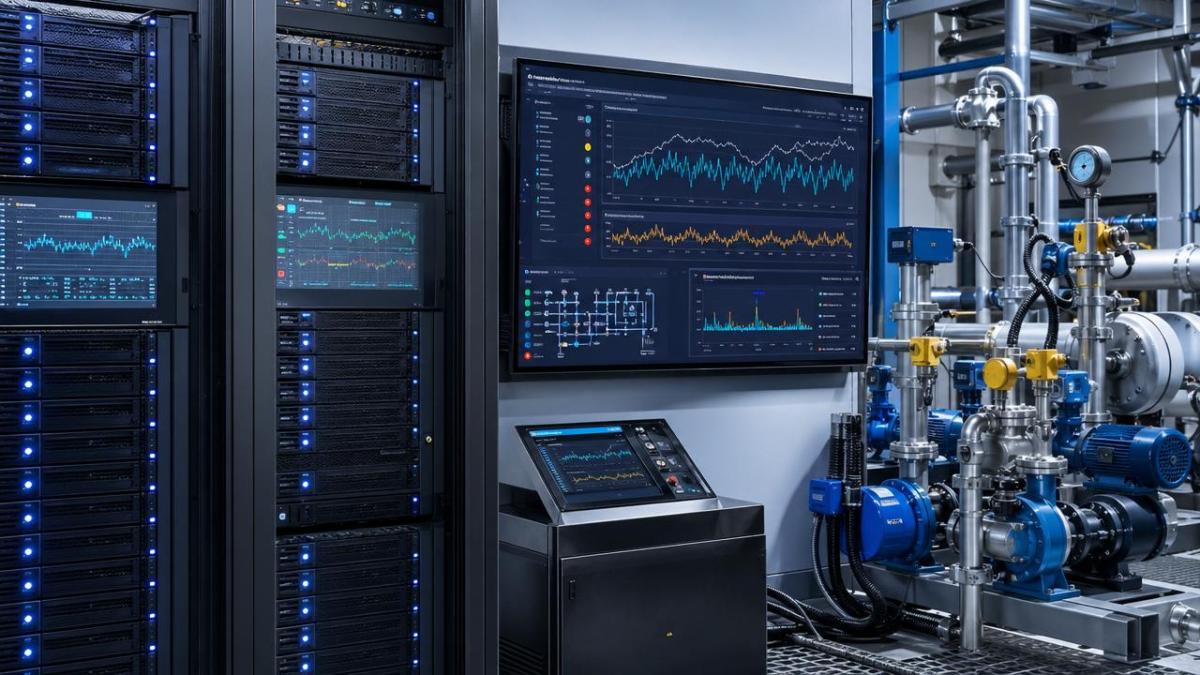
In industrial environments, a historian is not merely a long-term archive. It is the operational memory of pumps, valves, motion systems, semiconductor tools, SCADA layers, utility loops, and process interlocks. When data historian storage capacity is constrained, after-sales maintenance personnel lose the time-resolution and historical continuity required to diagnose intermittent faults, verify repairs, and defend service decisions.
This is especially visible in mixed industrial portfolios where legacy equipment and newer digital assets coexist. A maintenance engineer may need to compare vibration trends from a bearing assembly, valve position oscillation in a chemical transfer skid, and alarm bursts from a digital twin interface. If the historian shortens retention, compresses data too aggressively, or slows down retrieval, root-cause analysis becomes fragmented.
For after-sales teams, the bottleneck usually appears in three stages:
- Initial inconvenience: trend screens load slowly, engineering queries time out, and users start exporting data manually into spreadsheets.
- Operational degradation: retention periods are shortened, exception reports become less complete, and alarm reconstruction loses context.
- Business risk: service claims become harder to validate, compliance evidence is weakened, and asset reliability programs lose confidence.
That is why data historian storage capacity should be evaluated as a serviceability issue, not only a server sizing issue. In sectors covered by G-CST, where systems are benchmarked against ISO, SEMI, ASME, and IEEE-aligned operating expectations, missing or slow historical data can affect maintenance quality as much as a failed sensor or unstable controller.
Which symptoms show that historian capacity has become a real bottleneck?
Maintenance teams often notice the bottleneck before central IT does because they interact with historian data under time pressure. The issue rarely begins with a full disk warning. It typically starts with delayed access to operational truth.
Common field symptoms
- Trend retrieval takes too long when analyzing recent failures or repeat breakdowns.
- High-frequency tags are downsampled, masking short spikes in temperature, vibration, pressure, or current draw.
- Alarm and event records cannot be correlated with process values over the same period.
- Maintenance teams are forced to reduce tag counts, disable secondary assets, or shorten retention windows.
- Batch, lot, or recipe traceability becomes incomplete in regulated or quality-sensitive operations.
The table below helps after-sales personnel distinguish between a mild performance issue and a structural data historian storage capacity problem.
A key insight is that storage saturation is only one part of the story. Query design, archive segmentation, tag governance, and event density all influence whether data historian storage capacity remains usable under maintenance workloads.
Where does the bottleneck hurt most across industrial applications?
Different asset classes stress historian platforms in different ways. In G-CST’s cross-sector view, the bottleneck becomes severe when a maintenance organization must support both high-frequency machine data and long-retention operational records.
Application scenarios that amplify historian strain
These scenarios show that the same storage architecture can behave very differently depending on tag behavior, event bursts, and service expectations. After-sales maintenance teams should therefore map historian demand by asset class rather than assume one retention rule fits every system.
A practical rule is simple: if the cost of one unresolved failure exceeds the cost of better historian design, then data historian storage capacity is already a frontline maintenance issue.
How should maintenance teams evaluate retention, query speed, and tag strategy?
Many organizations size historians by total disk space alone. That method is too narrow. Maintenance teams need an evaluation model that links storage behavior to service outcomes.
A field-oriented evaluation checklist
- Classify tags by service importance. Critical diagnostic tags should not share the same compression policy as low-value status tags.
- Review actual troubleshooting windows. If major faults are investigated over 6, 12, or 24 months, retention should align with those cycles.
- Measure query response under real use. A system that performs well for one-day trends may fail when engineers request cross-asset history for a quarter or a year.
- Separate compliance retention from diagnostic retention. Some records must be preserved for audit purposes, while others need higher granularity for shorter periods.
- Validate archive recovery and export capability. Capacity planning is incomplete if historical data cannot be restored or handed over during service disputes.
The table below provides a practical selection framework for data historian storage capacity decisions from a maintenance viewpoint.
Organizations that work with G-CST often benefit from benchmarking these dimensions across multiple industrial pillars, because the right answer for a semiconductor utility skid may not match the right answer for a valve network or motion control platform.
What are the main solution paths when data historian storage capacity is under pressure?
There is no single fix. The correct response depends on whether the bottleneck is caused by volume, structure, architecture, or operating policy. Maintenance leaders should avoid defaulting to “buy more storage” without understanding the failure mode.
Four realistic response strategies
- Optimize tag and compression policy. Remove redundant tags, tune deadbands, and preserve higher fidelity only where diagnostics truly require it.
- Tier storage by data value. Keep recent diagnostic history in faster storage while archiving older compliance records separately.
- Re-architect query and archive design. Better indexing, partitioning, and event correlation often improve usable capacity without immediate hardware expansion.
- Expand infrastructure selectively. Add storage, compute, or historian nodes only after usage patterns and service priorities are mapped.
For procurement and service planning, the trade-off is not simply capital cost versus storage volume. The true comparison is between short-term savings and the long-term cost of weak diagnostics, longer downtime, and avoidable repeat visits.
Common mistakes to avoid
- Reducing retention across all assets equally, even when only a small percentage of tags drives most growth.
- Over-compressing vibration or transient process data that maintenance teams later need for fault reconstruction.
- Treating alarm logs, process history, and maintenance events as separate silos with inconsistent timestamps.
- Ignoring standards-related retention or traceability expectations in high-specification industrial projects.
How do standards, reliability expectations, and cross-sector benchmarking affect the decision?
While no single global standard defines one universal historian size, industrial projects are still shaped by documentation quality, traceability, and reliability expectations. In practice, teams often align data practices with broader quality and engineering frameworks such as ISO-managed processes, SEMI-related semiconductor operational rigor, ASME documentation discipline, and IEEE-oriented system integrity principles where applicable.
For after-sales maintenance personnel, this means data historian storage capacity should support more than daily operations. It should also support:
- Evidence for service reports and non-conformance investigations.
- Traceability during customer audits, supplier reviews, or process validation efforts.
- Reliable baselines for predictive maintenance, digital twin tuning, and lifecycle optimization.
This is where G-CST adds strategic value. Because the platform benchmarks industrial software, digital twins, motion systems, fluid handling assets, semiconductor support equipment, and advanced materials against internationally recognized technical frameworks, decision-makers can assess historian-related choices in operational context rather than as isolated IT purchases.
FAQ: what do after-sales teams ask most about data historian storage capacity?
How do we know whether poor query speed is caused by storage capacity or bad configuration?
Check both. If performance drops mainly during long-range or multi-tag queries, archive layout and storage throughput may be the issue. If even short-range queries fail, review indexing, tag design, and application-layer requests. Maintenance teams should test with real fault-analysis workloads, not only vendor benchmark scenarios.
What retention period is usually reasonable for maintenance use?
There is no universal number. High-resolution data may only be needed for a shorter recent window, while summarized trend history may be needed for a year or more to compare recurring failures, seasonal loads, or degradation patterns. The right answer depends on asset criticality, service contract terms, and compliance obligations.
Should we reduce tag count first when data historian storage capacity is tight?
Not blindly. Start by identifying low-value, duplicate, or permanently static tags. Protect tags that support transient diagnostics, reliability modeling, and customer dispute resolution. Cutting the wrong tags may save storage but increase downtime and service ambiguity.
Is cloud or hybrid architecture always better for historian growth?
Not always. Hybrid designs can improve scalability and archival flexibility, but they also introduce latency, governance, cybersecurity, and integration considerations. Facilities with strict uptime or data sovereignty constraints should assess architecture based on response-time needs, export control realities, and operational criticality.
Why choose us when historian capacity decisions affect uptime, traceability, and service quality?
G-CST supports industrial buyers and maintenance-focused organizations by connecting historian capacity questions to the real engineering environment around them. Instead of treating storage as a generic IT line item, we help evaluate how retention, query speed, tag policy, and system architecture affect semiconductor support assets, pump and valve reliability, precision motion diagnostics, SCADA visibility, and digital twin usefulness.
You can contact us for practical support on the topics that matter during procurement, retrofit, or service optimization:
- Parameter confirmation for retention horizon, tag density, sampling strategy, and archive segmentation.
- Solution selection between optimization, tiered storage, architecture redesign, or capacity expansion.
- Delivery-cycle discussions for phased upgrades that minimize service disruption.
- Custom benchmarking aligned with ISO, SEMI, ASME, and IEEE-related operating expectations where relevant.
- Quotation communication for multi-site historian modernization, maintenance analytics support, and cross-platform data strategy.
If your team is already seeing slower trends, shorter retention, or incomplete alarm context, the right time to review data historian storage capacity is before the next critical failure forces a rushed decision. A structured assessment now can protect troubleshooting speed, asset visibility, and long-term service credibility.
Recommended News
 Jun 19, 2026Mobile Accessories Trends in 2026: Which Categories Still Have MarginMobile accessories trends in 2026 reveal which categories still protect margin. Explore high-potential segments like GaN chargers, Qi2 gear, power banks, and premium protection.
 Jun 18, 2026Smart Home Devices Wholesale Bulk Order: Cost Traps to Check FirstSmart home devices wholesale bulk order buyers should check hidden costs before committing. Learn how compliance, firmware, compatibility, and logistics affect real margin.
 Jun 17, 2026Smart Hotel Installation Checklist for Stable System IntegrationSmart hotel installation checklist for stable integration: learn how to align rooms, public areas, networks, and protocols to reduce failures, improve uptime, and deliver a smoother guest experience.
 Jun 15, 2026Energy Auditing Checklist: Find Waste, Cut Costs, Improve UptimeEnergy auditing checklist to find hidden waste, cut energy costs, and improve uptime. Learn what to inspect first, prioritize quick wins, and turn audit findings into practical action.
 Jun 14, 2026Industrial Automation Software Solutions for Faster Line VisibilityIndustrial Automation Software solutions improve line visibility, reduce downtime, and strengthen traceability across assembly, process, and precision manufacturing. Learn how to choose the right fit.
 Jun 12, 2026Environmental Monitoring Systems: Key Features for ComplianceEnvironmentalmonitoringsystems are essential for compliance. Discover the must-have features for audit readiness, data integrity, alarms, and reliable facility control.
 Jun 12, 2026B2B Manufacturing Trends Shaping Supply Chains in 2026B2B manufacturing in 2026 is reshaping supply chains through resilience, traceability, compliance, and digital integration. Explore the trends driving smarter sourcing decisions.
 Jun 11, 2026Smart Manufacturing Trends 2026 for Industrial AutomationSmart manufacturing trends 2026 for industrial automation reveal how edge intelligence, verified interoperability, and compliance-ready systems can boost uptime, resilience, and smarter investment decisions.
![]() Jun 09, 2026Supply Chain Visibility: Key Metrics That Prevent DelaysSupply chain visibility starts with the right metrics. Discover 7 proven indicators that help prevent delays, reduce risk, and keep engineering projects on schedule.
Jun 09, 2026Supply Chain Visibility: Key Metrics That Prevent DelaysSupply chain visibility starts with the right metrics. Discover 7 proven indicators that help prevent delays, reduce risk, and keep engineering projects on schedule.![]() Jun 05, 2026Workplace Solutions That Cut Downtime in 2026Workplace solutions that cut downtime in 2026: explore predictive maintenance, resilient infrastructure, and smarter procurement strategies to boost uptime and reduce operational risk.
Jun 05, 2026Workplace Solutions That Cut Downtime in 2026Workplace solutions that cut downtime in 2026: explore predictive maintenance, resilient infrastructure, and smarter procurement strategies to boost uptime and reduce operational risk. Jun 02, 2026ESS Selection: Capacity, Safety, and ROIESS selection made clear: compare usable capacity, safety compliance, supplier reliability, and ROI factors to choose a resilient energy storage system with long-term value.
 Jun 02, 2026Photovoltaic Panels: 2026 Cost and Payback GuidePhotovoltaic panels in 2026: compare costs, incentives, ownership models, and payback scenarios to build a smarter, lower-risk solar investment plan.
 Jun 01, 2026Smart Hotel Supplier Checklist for Scalable Guest Room AutomationSmart hotel supplier checklist for choosing scalable guest room automation with reliable integration, cybersecurity, lifecycle support, and lower project risk.
 May 31, 2026Benchmarking for Smart Hotels: Metrics That MatterBenchmarking for smart hotels reveals the metrics that matter—energy, uptime, cybersecurity, guest adoption, and vendor resilience—to guide smarter investments and stronger performance.
 May 29, 2026Smart Hotel Automation Cost Payback GuideSmart hotel automation cost payback guide: evaluate ROI, energy savings, labor efficiency, integration risks, and lifecycle costs before investing.
 May 28, 2026Industrial Cloud Platform OEM vs Custom Build: Key Trade-OffsIndustrial cloud platform OEM vs custom build: compare speed, cost, compliance, lock-in, and control to choose the right industrial platform strategy for growth.
 May 27, 2026Industrial Edge Computing Platform: Latency vs Cost in 2026Industrial edge computing platform selection in 2026: compare latency, cost, security, and scalability with a practical checklist to reduce TCO and support real-time AI.
 May 27, 2026How to Compare Data Historian Software for Factory UptimeData historian software factory teams trust can improve uptime, traceability, and compliance. Learn how to compare reliability, scalability, and integration before you buy.
 May 26, 2026HMI Software OEM: Key Integration Checks Before LaunchHMI software OEM manufacturer launch guide: verify protocol integration, cybersecurity, performance under load, and lifecycle support before go-live to reduce risk and ensure reliable industrial deployment.
 May 25, 2026IIoT Gateway Wholesale: Key Cost and Compatibility Checksiiot gateway wholesale buyers should compare true lifecycle cost, protocol compatibility, cybersecurity, and rollout readiness to avoid risk and choose scalable industrial solutions.
 May 25, 2026How to Compare Industrial Cybersecurity Suppliers in 2026Industrial cybersecurity supplier comparison in 2026: use a practical checklist to verify OT standards, protocol coverage, safe deployment, and supplier resilience before you buy.
 May 24, 2026Industrial SCADA System OEM: Integration Risks to Check FirstIndustrial SCADA system OEM selection starts with integration risk. Learn how to assess protocol fit, cybersecurity, data integrity, and lifecycle support before rollout.
 May 23, 2026Motion Control Software Trends Shaping 2026 IntegrationMotion control software trends are redefining 2026 integration with open connectivity, edge analytics, cybersecurity, and digital twin readiness. Discover what to evaluate before choosing a platform.
 May 17, 2026Leak Detection Policy Updates: New Compliance Gaps to WatchLeak detection policy updates are exposing new compliance gaps across industrial operations. Discover key risks, checklist actions, and practical steps to strengthen audits, safety, and reporting control.